
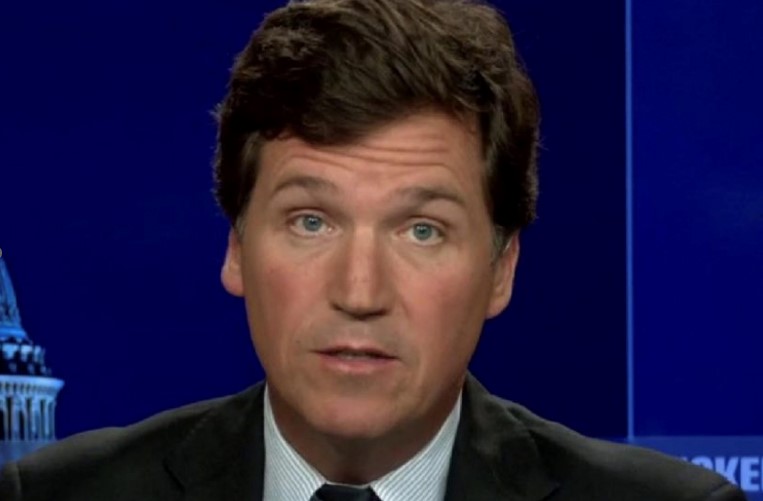
The most-watched voice in conservative media just told the Columbia Journalism Review he's going to help build a third party after leaving the GOP earlier this year. The Republican establishment's instinct will be to dismiss it. That instinct is the problem.
"I'm going to help build a third party," Tucker Carlson said. "There should be a good-faith effort to figure out what benefits the country." No formal structure exists yet. No party name, no timeline, no ballot-access strategy. Carlson was clear he has no interest in being a candidate himself. What he's describing isn't a campaign launch. It's a warning shot — and the GOP should be paying close attention to what he says is driving it.
Carlson laid out two grievances. They're not new. They are, however, real.
The first is economic. "If you make $60,000 a year, you're degraded," Carlson said. "Your life expectancy has gone down, and the promise of your children's lives is likely gone. No one seems to care." That's a description of what's happened to a significant slice of the Republican base — the working-class voters who showed up for Trump in 2016 and 2024 and who are still waiting for someone in Washington to put them first.
The second is foreign policy. Carlson has been distancing himself from the GOP's Middle East priorities since at least June, and in this interview he was direct about why. "The U.S. government should have, as its first priority, the welfare of its own people." When pressed about the current conflicts, he didn't hedge. "What about Hamas? I officially don't care about Hamas." That position — America first, full stop — reflects where a meaningful portion of the conservative base is right now, watching Congress debate foreign commitments while their own communities fall further behind.
The frustration, Carlson said, has extended to his relationship with the President. He told the interviewer he hasn't spoken to Trump since the Iran conflict began. "I'm not interested in talking to him," he said. "He's not a man in charge of his own life at this point." That's Carlson's read on a specific moment in time. What it reflects is something broader — a segment of the base that supported Trump, still broadly does, and yet feels the current direction isn't matching the priorities they voted for.
The establishment response will be predictable: third parties don't work. Ross Perot gave us Clinton. Ralph Nader gave us Bush. The math punishes insurgents in a first-past-the-post system. That's not wrong as a matter of electoral mechanics.
But it misses the point. Carlson isn't claiming a third party wins next cycle. He's saying the Republican Party has stopped being responsive to a meaningful piece of its own coalition — and that eventually, people stop waiting. The GOP can treat this as one prominent voice venting, or it can treat it as a signal that two specific and serious grievances — economic abandonment and foreign policy disconnect — are building pressure the party hasn't figured out how to address.
"I'm not strategic in any way," Carlson said of his own approach. "I make almost all decisions on the basis of smell and instinct." His instinct, right now, is that the party isn't doing enough for the people who built it.
He may be wrong about a third party being the answer. But the grievances driving him there are real, they're shared by more than just Tucker Carlson, and the Republican Party would be wise to take them seriously before the conversation moves further down this road.