
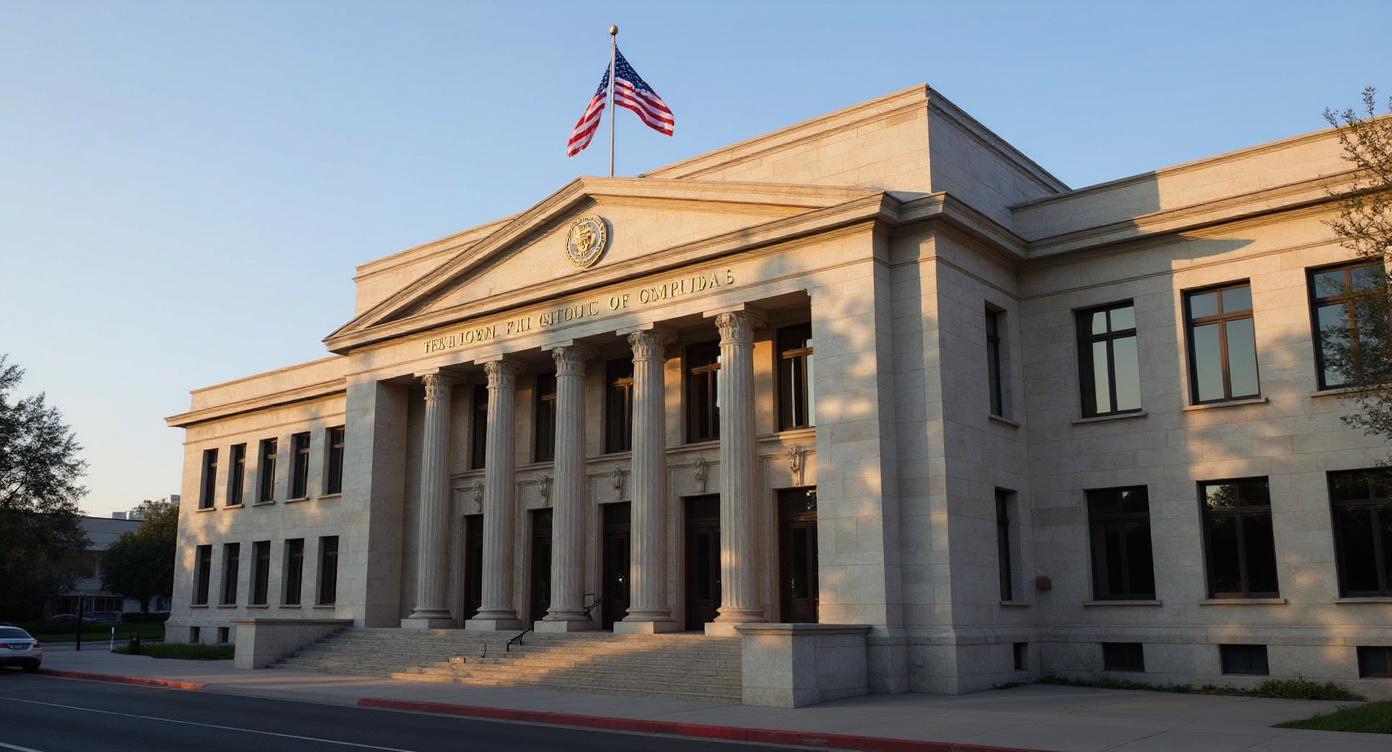
Judge Jinsook Ohta was born in Seoul in 1976 and came to the United States at age six. On Wednesday, from a federal bench in San Diego, she ordered the Trump administration to reopen the Diversity Visa Lottery — the same program that handed a green card to the man who murdered three people in Rhode Island and Massachusetts last year.
The guest is rewriting the guest list.
Ohta, a Biden appointee sitting on the U.S. District Court for the Southern District of California, issued a preliminary injunction in Red Eagle Law v. Rubio compelling Secretary of State Marco Rubio and the State Department to restart the DV-1 lottery for fiscal year 2027. The ruling requires the government to announce registration by October 29, open online entries by November 1 for a 30-day window, and notify winners by December 3.
The program, created by Congress in 1990, allocates up to 55,000 green cards annually through a random drawing. No skills test. No employer sponsorship. No demonstrated value to the country receiving you. A literal lottery.
President Trump moved to shut it down in December 2025, after a 48-year-old Portuguese national named Claudio Manuel Neves Valente — who obtained his green card through the diversity lottery in 2017 — went on a shooting rampage that killed two students at Brown University and MIT professor Nuno Loureiro. Neves Valente was later found dead of a self-inflicted gunshot wound. Then-Homeland Security Secretary Kristi Noem announced the pause the same month: "At President Trump's direction, I am immediately directing USCIS to pause the DV1 program to ensure no more Americans are harmed by this disastrous program."
Noem didn't mince — actually, she was blunt about the reason. "This heinous individual should never have been allowed in our country."
The State Department suspended the lottery indefinitely and added a new rule in March 2026 requiring a valid passport just to enter. The Trump administration argued in court that the legal deadlines for the 2027 lottery had already passed — the calendar had simply moved on. Judge Ohta rejected that argument, ruling that enforcing the standard timeline would effectively prevent any lottery from ever happening again, which she apparently considered a problem rather than a feature.
Red Eagle Law, a California immigration firm, brought the suit. Their client list isn't exactly a roster of Americans worried about the program's body count. The filing names Rubio as defendant because the Secretary of State oversees consular processing of the visas. So the legal theory is straightforward: the statute says up to 55,000 visas, the administration stopped issuing them, and a judge says start again.
What the ruling doesn't address is the eight people killed in the 2017 New York City truck attack by another diversity visa recipient. It doesn't weigh the three dead in Rhode Island and Massachusetts. It doesn't calculate the odds that the next random winner will be another Neves Valente. Those considerations, apparently, fall outside the scope of the preliminary injunction.
The Trump administration suspended the program because a lottery winner murdered Americans. A Biden-appointed judge born in Seoul looked at that sequence and concluded the real problem was the suspension.