
Eight. That's the number of arrests Immigration and Customs Enforcement made from 3,145,375 visa overstay leads received during fiscal years 2021 through 2024. Not eight thousand. Not eight hundred. Eight human beings, out of more than three million foreign nationals flagged for overstaying their welcome in the United States.
It's like they weren't even trying to protect the homeland.
A Department of Homeland Security Office of Inspector General report reveals that of those 3.1 million leads, 104,049 were categorized as potential national-security or public-safety concerns. The kind of cases you'd think would get prioritized. ICE deemed 21,885 of those viable for investigation. From there, 496 investigations were opened.
And from 496 investigations into people flagged as potential threats to national security and public safety, the Biden-era agency produced eight lead-driven arrests.
The highest-risk category — Priority 1 leads, the ones that should have had agents moving before the coffee got cold — fared even worse. Of 1,769 viable Priority 1 leads, HSI opened 84 investigations. Two arrests. Two.
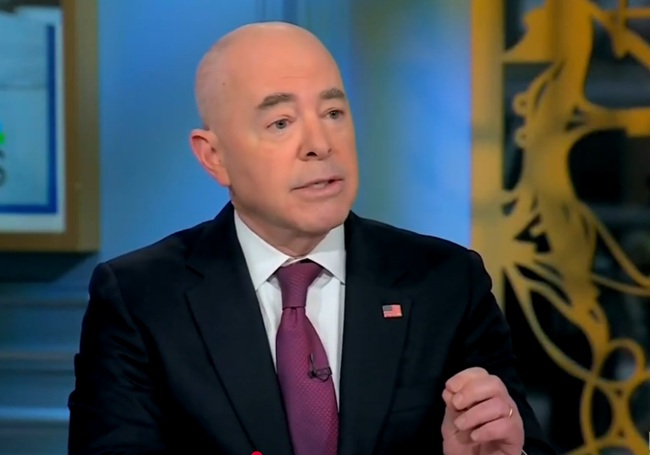
In September 2021, then-Homeland Security Secretary Alejandro Mayorkas issued a policy restricting which leads ICE could pursue. The same Mayorkas who spent three years telling Congress the border was secure. Under his directive, viable leads cratered from 20,648 in fiscal 2021 to 415 in fiscal 2022. They ticked up slightly to 615 in fiscal 2023 and fell again to 207 in fiscal 2024.
That's not a resource problem. That's a policy choice. Mayorkas didn't just fail to enforce immigration law — he built a system that made enforcement structurally impossible, then staffed it with people who followed the new rules.
The OIG report includes case studies that illustrate what those 3.1 million ignored leads actually look like in the real world. A Honduran national entered the country in July 2022 on a tourist visa. By August 2022, he'd been charged in Maryland with rape, assault, and sexual offense. A court released him on bond. HSI didn't arrest him on the overstay matter until September 2023 — more than a year after the charges.
A Chilean national admitted under the Visa Waiver Program was arrested in Florida and charged with credit-card fraud, burglary, theft, and criminal mischief. HSI eventually picked him up after he overstayed. Eventually.
These weren't hypothetical risks sitting in a database somewhere. These were people committing violent crimes and financial fraud on American soil while the agency responsible for tracking them had a policy of not tracking them.
By the end of fiscal 2024, 194 of 205 Priority 1 leads couldn't even be referred for investigation because ICE didn't have sufficient address data. The agency tasked with finding visa overstayers didn't know where they lived.
The retirement-age Americans reading this are the ones who built the system these agencies were supposed to protect. They paid into it for decades. They followed the rules. They filed their taxes and renewed their licenses and showed up for jury duty. And the government they funded couldn't manage to arrest more than eight people out of 3.1 million flagged foreign nationals in four years.
The Inspector General's findings paint a picture of an agency that wasn't understaffed or underfunded — it was handcuffed by its own leadership. Mayorkas turned ICE's visa overstay program into a filing cabinet. Leads went in. Nothing came out.
Three point one million leads. Eight arrests. That's a success rate of 0.00025 percent.
The Honduran national charged with rape in Maryland is still in the system somewhere. So are the other 3,145,367.