
In 1998, CIA field agents in Afghanistan had Osama bin Laden in a 36-hour targeting window in Kandahar. They had the location. They had the shot. President Bill Clinton said no.
Twenty-five years and 2,977 American lives later, Bill Clinton went on the radio to talk about how upset that made him.
The former president sat down with John Catsimatidis on WABC Radio's "Cats Roundtable" last Sunday and offered what he apparently considers a defense of his record on terrorism. "I had authorized the CIA to try to take him out," Clinton said. He described being "scared" and "mad" when the agency pulled the plug at the last minute on an operation he believes "might well have succeeded."
The reason the CIA gave for canceling? "They were afraid that if they missed, they'd kill a lot of innocent civilians."
The most powerful intelligence apparatus on the planet had a bead on the man who would orchestrate the worst terrorist attack in American history, and they walked away because the math on collateral damage didn't look clean enough for a memo.
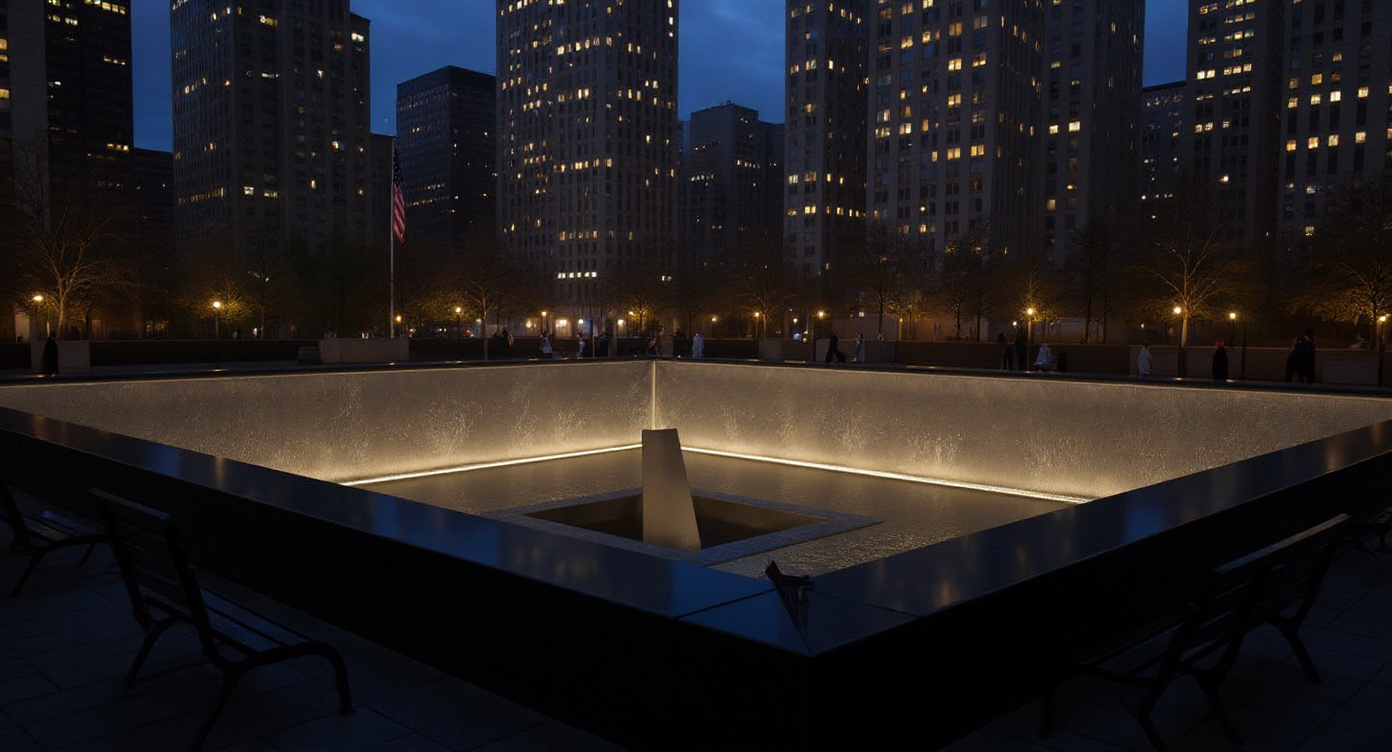
Clinton's interview landed just days after the 25th anniversary of September 11, and it arrived alongside the declassification of 71 President's Daily Briefs that paint a picture the Clinton administration would rather have stayed in the vault. Among them: a September 10, 1998 CIA brief warning that al-Qaeda operatives were planning to pack aircraft with explosives and fly them into targets in Washington, D.C. A December 4, 1998 brief detailed al-Qaeda preparations for hijackings, including a trial run at a New York airport.
Three years before the towers fell, the intelligence community was writing it down in black and white and handing it to the president. Clinton's response, by his own account, was to authorize action. The CIA's response was to find reasons not to take it.
Declassified memos from 1998 and 1999 reveal that field agents identified three separate opportunities to target bin Laden within that 36-hour Kandahar window. CIA officers on the ground, including field agent Gary Schoen and bin Laden station chief Michael Scheuer, reported mounting frustration as Washington officials repeatedly balked — over potential mosque damage, over civilian proximity, over risk calculations that read better in a briefing room than on a battlefield.
Clinton has told this story before, actually. On September 10, 2001 — the day before the attacks — he was in Australia giving a business talk and told the audience he'd once had the chance to kill bin Laden in 1998 but passed on a missile strike on Kandahar because it would have killed 300 innocent women and children. He said he decided he "just couldn't do it." The next morning, he watched the second plane hit the towers on Australian television and, by his own telling, "immediately said that bin Laden did this."
He knew exactly who it was. Instantly. Because he'd spent years being briefed on exactly what that man was planning to do.
The 9/11 Commission, led by executive director Philip Zelikow, later identified nine key policy junctures where the Clinton and Bush administrations had opportunities to disrupt the plot. The commission documented that al-Qaeda pulled off the entire operation for an estimated $400,000 to $500,000. Half a million dollars to murder nearly 3,000 people, collapse two skyscrapers, punch a hole in the Pentagon, and reshape American life for a generation.
Clinton told Catsimatidis he wishes he'd "done even more to get him." He described bin Laden as having "substantial financial resources and operational capacity" and acknowledged the terrorist leader "had been planning an attack on U.S. soil for a long time." He also warned that another attack is "entirely possible" and that "we have to stay on guard."
Generous advice from the man who had the authority, had the intelligence, had the warnings dated and timestamped, and still couldn't close the deal. The CIA's caution about civilian casualties didn't operate in a vacuum. It operated under a commander-in-chief whose administration set the risk tolerance. Field agents don't unilaterally abort presidential authorizations because they feel like it. Someone above them decided that the downside of acting outweighed the downside of waiting.
Operation Infinite Reach — the August 20, 1998 cruise missile strikes Clinton ordered after the Kenya and Tanzania embassy bombings — hit Afghan training camps and a Sudanese pharmaceutical plant. It didn't touch bin Laden. The operation that might have actually reached him never launched.
Clinton summed up his view of the terrorist threat with six words: "You only have to miss once."
The CIA didn't miss. They never took the shot. Seventy-one declassified briefs now confirm the government knew what was coming, who was coming, and roughly how. Bin Laden wasn't killed until May 2, 2011, when Navy SEALs found him in Abbottabad, Pakistan — under a different president, thirteen years after Kandahar.
Clinton was scared and mad. The 2,977 people who went to work that Tuesday morning didn't get the chance to be either.