
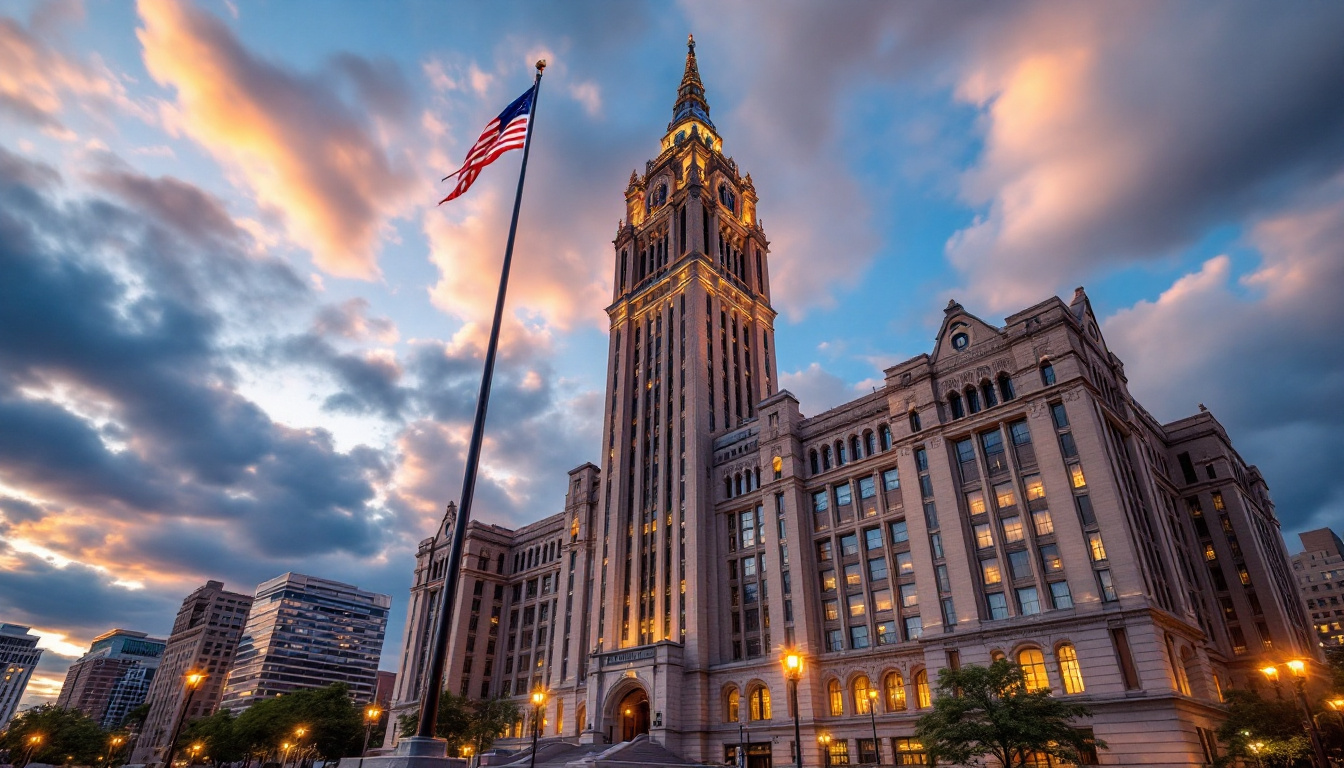
On July 1, 2026, officials in Buffalo, New York gathered in Niagara Square for a flag-raising ceremony at City Hall. The flag they raised was not the Stars and Stripes. It was the flag of Somalia.
One day earlier, Mayor Sean Ryan's administration had quietly confirmed that the city would not be hosting a Fourth of July fireworks display for America's semiquincentennial — the nation's 250th birthday.
The City of Buffalo released a statement explaining that "an appropriate site could not be identified that would provide a safe and widely accessible viewing experience for residents." Buffalo, a city of approximately 280,000 people, apparently could not locate a single patch of sky suitable for fireworks on the biggest Independence Day in a quarter-millennium. Every other city in Western New York managed to figure it out. Buffalo could not.
The timing is what elevates this from bureaucratic incompetence to something harder to explain. The Somali flag ceremony was organized by Heal International, a refugee-centered nonprofit, and promoted by Democratic Assemblymember Jon D. Rivera. Heal International has raised the Somali flag at Niagara Square for four consecutive years to mark Somalia's Independence Day on July 1. This year, the juxtaposition with the fireworks cancellation turned a routine cultural event into a national story.
Mayor Ryan had previously promised that "for the first time in a generation the city of Buffalo will be bringing fireworks back to downtown Buffalo." He also said "events like these are important." Apparently not important enough to find a venue. The city did note that Erie County would host an America 250 event with fireworks on August 2, launched from a barge — a full month after the actual birthday.
Buffalo has hosted fireworks before. Mayor Ryan himself promised to bring them back. And somehow the logistical puzzle became unsolvable in the same week city officials found the time and resources to organize a flag-raising ceremony for another country -- in the same public square where fireworks viewing would have taken place.
This is the pattern that corrodes public trust faster than any policy debate. It's not that a Somali cultural event happened — it's been happening for four years. It's that a city government told 280,000 residents it couldn't celebrate America's 250th birthday, then demonstrated it had plenty of institutional energy for a different nation's flag on the same flagpole, three days before the Fourth. The question isn't whether the two events are formally connected. It's whether anyone in city leadership looked at the calendar and thought about what it would look like.
More than 600 Somali Bantu residents have called Buffalo home since the first wave arrived in the summer of 2003. Their community is part of the city. But a flag on a government building carries weight that a neighborhood block party does not — it's an official act, with official symbolism, on an official structure. When the official American celebration gets canceled and a foreign flag gets raised in the same week, the symbolism writes itself, whether the mayor intended it or not.
Ryan's office hasn't explained why the fireworks promise collapsed. They haven't addressed the optics. They've pointed to August 2 and a barge.
A quarter-millennium only comes around once. Buffalo spent it flying someone else's colors.