
Section 10 of California's "No Vigilantes Act" required non-uniformed federal agents — including ICE — to visibly display their agency identification and either their name or badge number during enforcement operations. Violations were classified as misdemeanors. The state wanted to prosecute federal officers for doing their jobs without introducing themselves first.
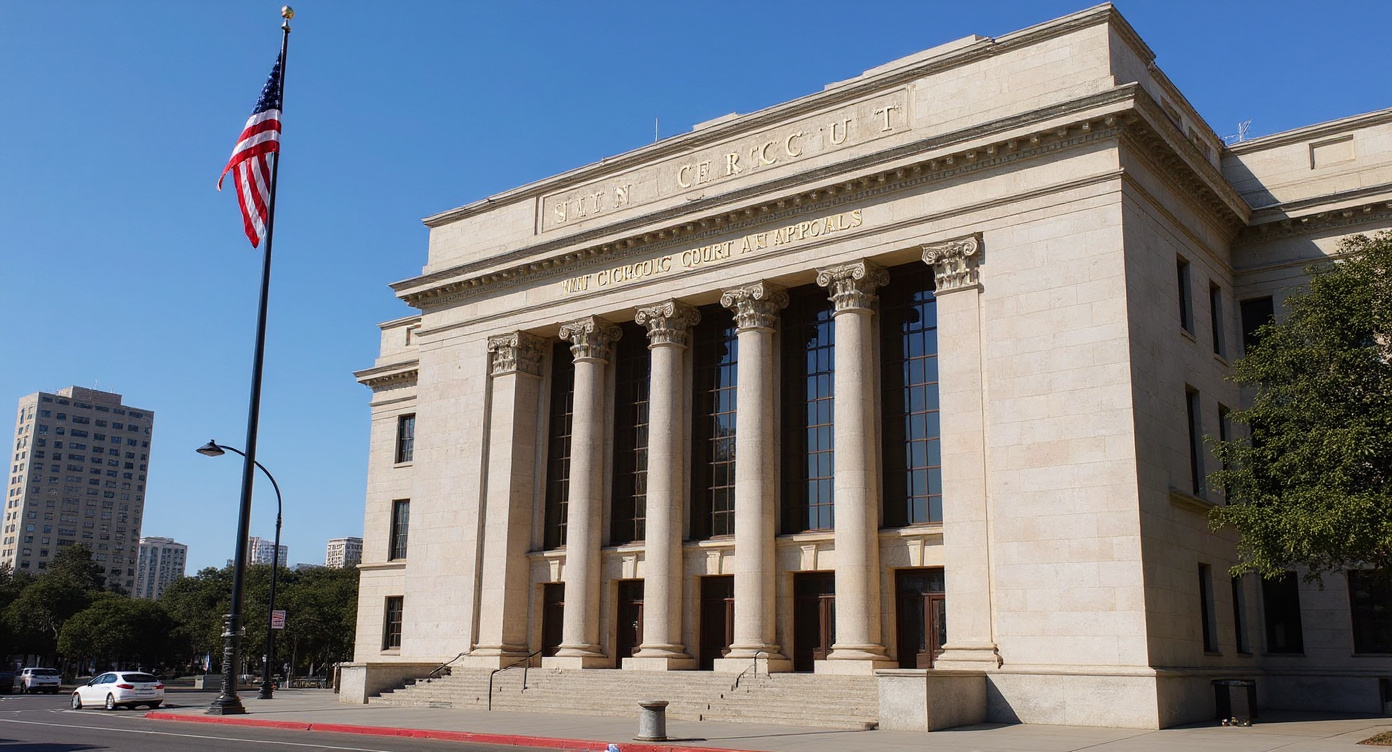
On Wednesday, a three-judge panel on the Ninth Circuit Court of Appeals killed it.
The ruling wasn't even close. Judge Mark Bennett, a Trump appointee who wrote the majority opinion, didn't find that the federal government was merely "likely to win" its constitutional challenge. The panel declared the government "certain" to succeed. That's the legal equivalent of not just losing — it's being told you were never going to win.
The court reversed the lower court's decision and ordered a preliminary injunction blocking enforcement of the provision.
The constitutional issue was straightforward. The Supremacy Clause. A state cannot directly regulate the federal government's core functions without Congressional authorization. California tried to dictate the operational procedures of federal law enforcement conducting immigration sweeps, and the Ninth Circuit — not exactly a conservative stronghold — told Sacramento it doesn't have that power.
Gov. Gavin Newsom signed the "No Vigilantes Act" in September 2025, alongside a companion bill called the "No Secret Police Act," which restricted officers from wearing face coverings during operations. A district judge already blocked that one separately earlier in 2026. So both of Newsom's marquee anti-enforcement laws have now been stopped by federal courts.
The stated purpose of the ID requirement was "accountability." The practical effect was exposure. Federal agents conducting immigration operations — often in hostile environments, often targeting gang members and human traffickers — would have been forced to display identifying information to the people they were arresting. Names. Badge numbers. Handed over to individuals with cartel connections in cities where cooperating with ICE has gotten local officials threatened.
The accountability argument assumes that federal agents answering to a chain of command that runs through the Department of Homeland Security to the President of the United States are somehow less accountable than a state legislature passing laws designed to obstruct them. The Ninth Circuit noticed the contradiction.
This is the second time in months that California's attempt to build a legal wall around illegal immigrants has been dismantled by the courts. The pattern is consistent: Newsom signs a bill with a dramatic name, a federal judge reads the Constitution, and the bill dies. The "No Vigilantes Act" lasted about thirteen months from signature to injunction. The "No Secret Police Act" lasted even less.
Two bills. Two courts. Same result.