
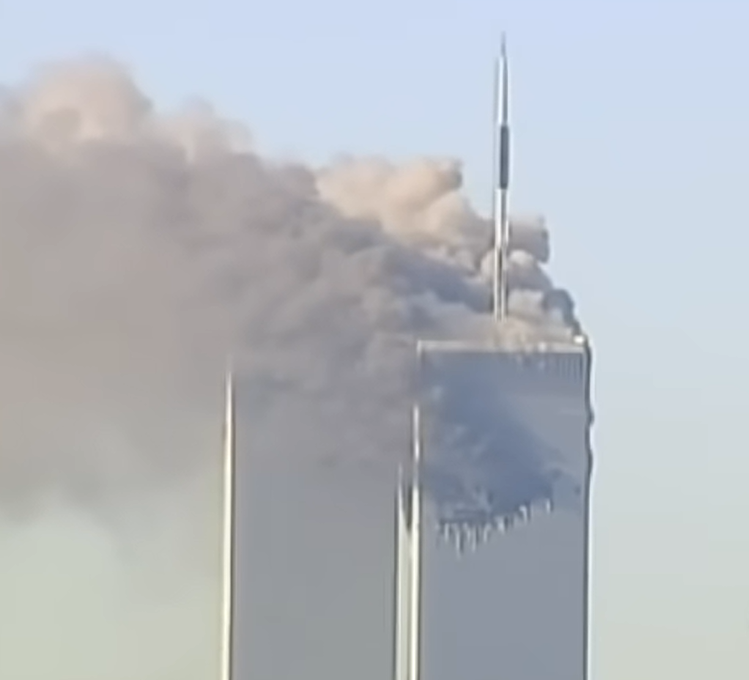
With the 25th anniversary of September 11 weeks away, the Canadian Broadcasting Corporation issued an internal memo instructing journalists not to independently describe the attacks as "terrorism" or the 19 al Qaeda operatives who carried them out as "terrorists." The directive, written by CBC News' senior director of journalistic standards and public trust, Basem Boshra, told reporters to use those words only when attributing them to someone else.
Nearly 3,000 people were murdered in Washington, Pennsylvania, and Manhattan that morning. The CBC wants to make sure we don't rush to judgment.
CBC Public Affairs Director Kerry Kelly confirmed the memo was real and defended it as routine. "It is the practice of the CBC to exercise extreme caution before using the words 'terrorist' and 'terrorism,'" Kelly said. "The memo was a reminder of the longstanding practice that favours the use of these terms with attribution in our reporting."
Extreme caution. About September 11th. Twenty-five years later.
The policy isn't new, as it turns out. CBC News general manager and editor-in-chief Brodie Fenlon has explained the network's position before: "We bear witness. But CBC News does not itself designate specific groups as terrorists, or specific acts as terrorism, regardless of the region or the events, because these words are so loaded with meaning, politics and emotion."
Loaded with meaning. That's kind of the point. When 19 men hijack four commercial airliners and fly them into buildings full of civilians, the meaning is the fact. Calling it "an event" or "an attack" without the word that describes exactly what it was isn't neutrality. It's editorial cowardice dressed up as journalistic standards.
The backlash was immediate. Conservative Canadian Member of Parliament Rachael Thomas, representing Lethbridge, Alberta, didn't mince words: "Refusing to call it an act of terrorism dishonours the victims, their families, the survivors, and the first responders." The Centre for Israel and Jewish Affairs also condemned the guidance, as did Toronto Sun columnist Warren Kinsella, who highlighted the absurdity of a taxpayer-funded broadcaster sanitizing the most documented terrorist attack in modern history.
New York City Councilwoman Vickie Paladino put a finer point on it. "The CBC guidance is frankly outrageous and insulting," Paladino said, "but it stands as a stark warning for what happens when you allow institutions of public trust to be taken over by leftists and foreign interests."
The CBC's policy doesn't just apply to 9/11. The same linguistic gymnastics have been applied to the 2005 London bombings, the 2004 Madrid train bombings, and the 2011 Moscow airport bombing. Any act of terror, anywhere in the world, gets the same treatment — stripped of the one word that accurately describes it, because editors like Boshra, an man originally from Egypt, decided that word is too "loaded."
The FBI calls them terrorists. Every government involved calls them terrorists. The Canadian government back in 2001, when the attacks happened, labeled the attack as terrorism. Canada even sent troops to fight alongside U.S. troops in Afghanistan in the wake of 9/11. The men who planned and executed September 11th called themselves soldiers in a holy war. But the CBC — funded by Canadian taxpayers — has decided it knows better than the perpetrators themselves about what to call the act.
There's a particular irony in a department called "journalistic standards and public trust" issuing guidance that accomplishes neither. You don't build public trust by refusing to state obvious facts. You don't uphold standards by pretending the clearest case of terrorism in living memory is somehow ambiguous.
Every American old enough to remember that morning knows exactly where they were when the towers fell. They remember the footage, the dust, the phone calls that never came. They don't need a Canadian news director to remind them that the word "terrorism" is complicated.
It isn't complicated. It's just inconvenient for people who've made a career out of not taking sides — even when one side flew planes into skyscrapers.