
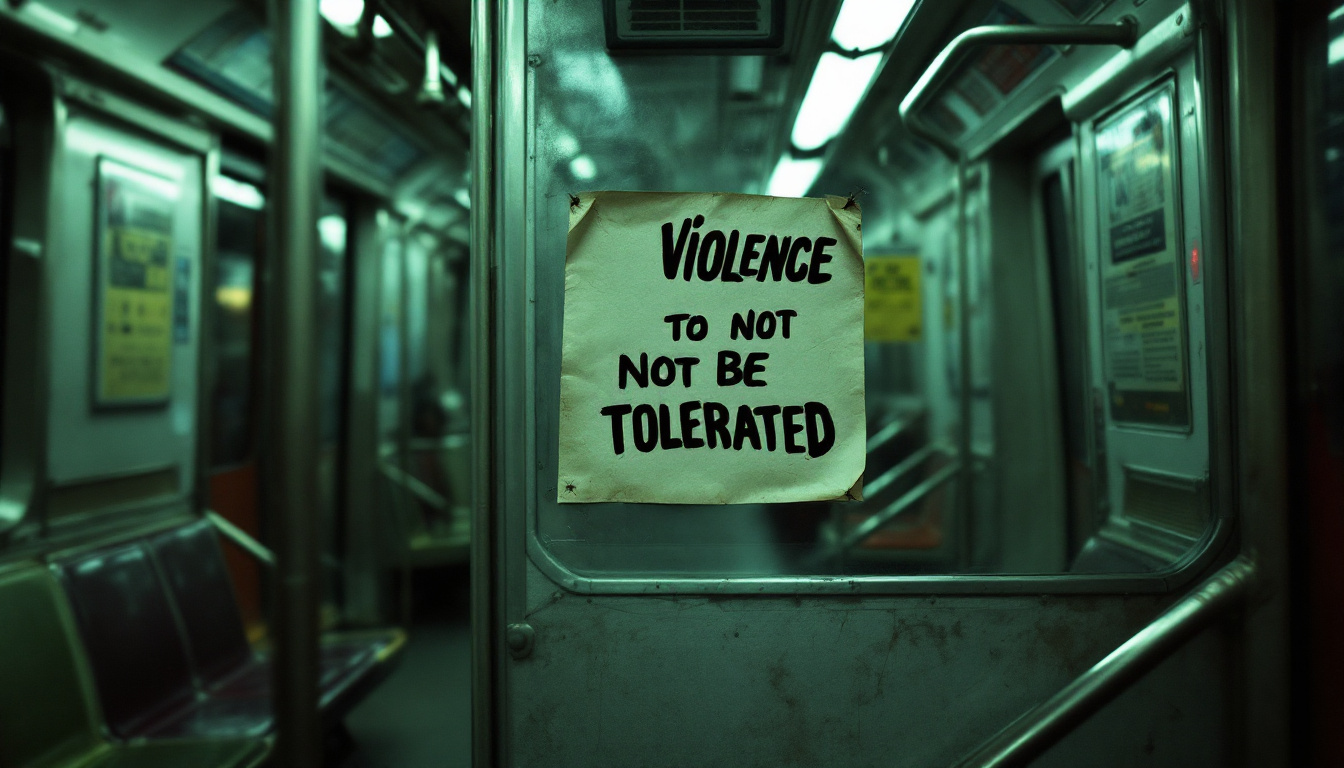
The signs read: "Violence on the CTA will not be tolerated. The Cook County State's Attorney's Office will prosecute and seek pretrial detention for all violent offenses on public transit." And Chicago leaders expect the 7,000 signs they put up all over the subway to stop criminals from committing violent offenses. That's their plan.
The signs cost residents of Chicago $100,000.
Cook County State's Attorney Eileen O'Neill Burke announced the campaign on July 28, saying, "In order to have a safe and thriving city, we need to have a safe public transportation system." She added that her office "is committed to doing everything we can to make our public transportation system the safest in the nation." The everything, in this case, is laminated cardstock.
CTA Acting President Nora Leerhsen said the signage campaign was intended "to reassure both riders and transit employees." Reassure them. Not protect them. Not deploy more security for them. Reassure them — with a sign that promises prosecution from the same county apparatus that has spent years making prosecution optional.
Here's what the sign actually says if you read it like someone who lives in Chicago: "We will prosecute and seek pretrial detention for all violent offenses on public transit." That's a remarkable commitment from a county that routinely releases violent offenders on electronic monitoring. The sign promises a standard of justice that Cook County hasn't applied to its streets, its stores, or its neighborhoods. But the L train — that's where the line gets drawn.
The people who assault riders on the CTA are not people who read signs and adjust their behavior. They are not deterred by the phrase "pretrial detention" because they've watched Cook County's pretrial detention system function for years. They know the difference between what a sign says and what a courtroom does.
Chicago spent the last several years reducing police presence, expanding cashless bail, and watching prosecutors decline cases at historic rates. Grocery stores closed. Businesses left. Residents moved. The city's answer to each of those problems was some version of "we're working on it" or "the data doesn't support that narrative." Now, for transit violence specifically, the answer is a poster.
Burke's office framed this as part of a broader public safety strategy. But the strategy, as presented, is communication — not enforcement. The 7,000 signs tell riders that violence won't be tolerated. They don't tell riders how many additional officers will patrol platforms, how many prosecutors will be assigned to transit cases, or what the conviction rate is for the violent offenses they're promising to pursue.
When your public safety plan fits on a placard, the plan isn't public safety. It's public relations.