
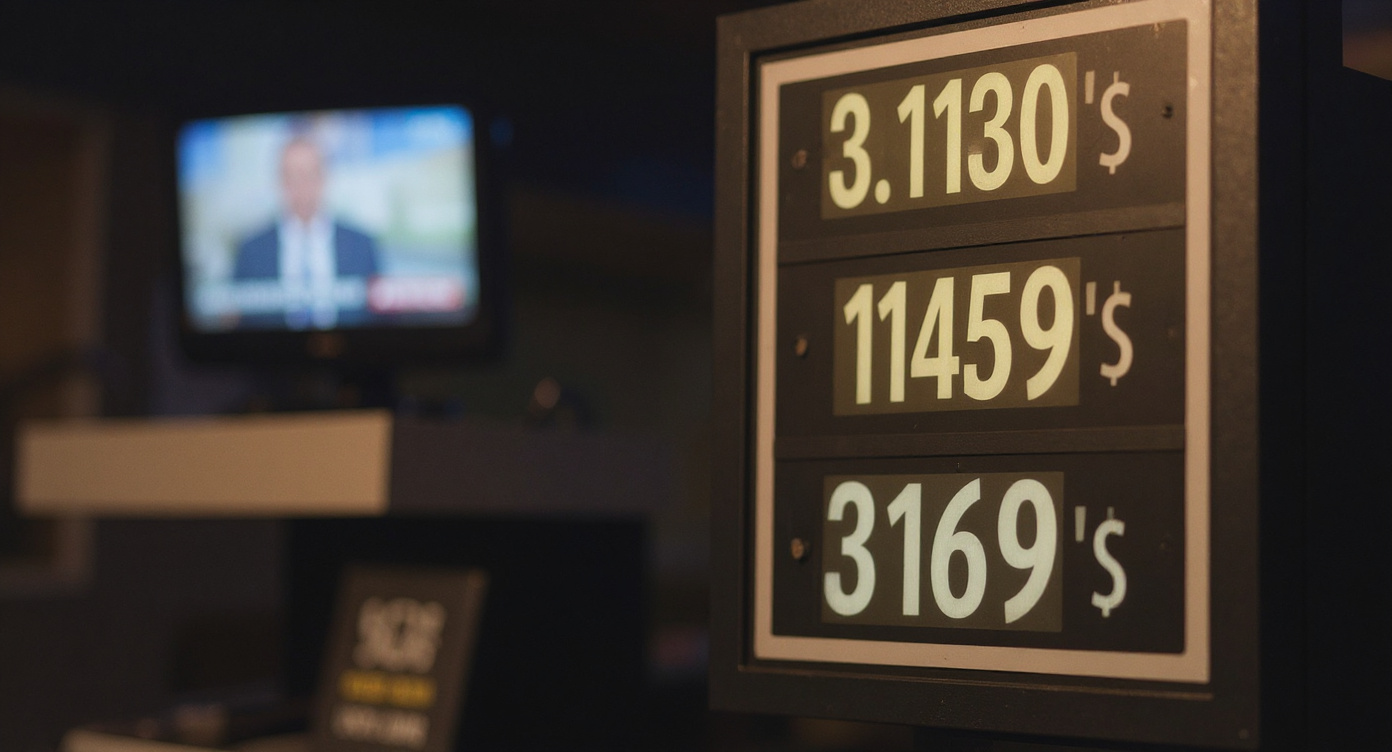
The national average for a gallon of regular gas sat at $3.86 on June 29. One month earlier, it was $4.39. Oil is trading at $71 a barrel. By every available metric, energy prices are heading in a direction Americans actually like.
CNN stopped counting.
CNN contributor Scott Jennings called out his own network for quietly removing its on-screen gas price tracker — the same graphic CNN ran prominently when prices were climbing under Joe Biden. Jennings didn't dance around it.
"Look, gas prices are not up. They're down! Oil is trading at $71 a barrel," Jennings said. "We don't run the gas price tracker on-screen anymore for a reason, you know?"
The tracker's last update was April 8. That's nearly three months of declining prices that CNN's audience never saw tallied on their screens.
The timeline tells the story. During the Biden administration, when the national average hit $5.02 per gallon — the highest recorded average of his presidency — CNN treated the gas price tracker like a permanent fixture. It sat on-screen during panel discussions, news segments, and breaking coverage, a constant visual reminder of pain at the pump. CNN senior reporter Matt Egan wrote a piece on May 20 about "Memorial Day sticker shock," and GasBuddy's head of petroleum analysis Patrick De Haan was quoted predicting "the national average for regular gas will hit $5 a gallon at some point next month if the Strait of Hormuz remains closed."
That prediction didn't materialize. Prices dropped. And the scoreboard vanished.
A network that wanted to inform its audience about energy costs would update the tracker in both directions. A network running a political operation retires the graphic the moment it stops serving the narrative. CNN chose the second option and assumed nobody would mention it.
Jennings mentioned it. On CNN's own air. To the host's face.
What makes this particular moment worth noting isn't that a major news network shaped coverage around a preferred outcome — that's Tuesday. It's that the evidence is so clean. Same network. Same graphic. Same topic. One direction gets a permanent on-screen ticker. The other direction gets silence. There's no editorial judgment to debate. There's no complex media-bias argument to untangle. They built a scoreboard, and when the score changed, they took it down.
The drop from $4.39 to $3.86 in a single month is the kind of movement that would have earned a CNN chyron, a panel segment, and a De Haan quote if it had gone the other way. Instead it earned a blank screen and a three-month gap in data.
The tracker told the truth. That was the problem.