
One year ago this week, President Trump stood in front of cameras and said five words that sent Washington's political class into cardiac arrest: "This is Liberation Day in D.C."
The predictions were unanimous. Martial law. Authoritarianism. A constitutional crisis wrapped in camouflage. Twelve months later, the numbers are in.
Overall crime in the nation's capital is down 20%. Homicides have dropped 32%. Robbery is down 16%. Motor vehicle thefts — the ones that had turned entire D.C. neighborhoods into an open-air chop shop — have been cut by 53%. Theft from automobiles fell 36%. Total property crime dropped 22%.
On August 11, 2025, Trump invoked Section 740 of the District of Columbia Home Rule Act of 1973, the provision that gives the president direct authority over the capital. He cited "crime, bloodshed, bedlam and squalor, and worse." Standing alongside him were Secretary of War Pete Hegseth, then-Attorney General Pam Bondi, Secretary of the Interior Doug Bergum, and FBI Director Kash Patel. It was the kind of lineup that makes cable news producers sweat through their shirts.
The media called it a power grab. Constitutional scholars booked back-to-back cable hits to explain why it wouldn't work. Democratic leaders warned of tanks in the streets. A year later, nobody's running those segments again.
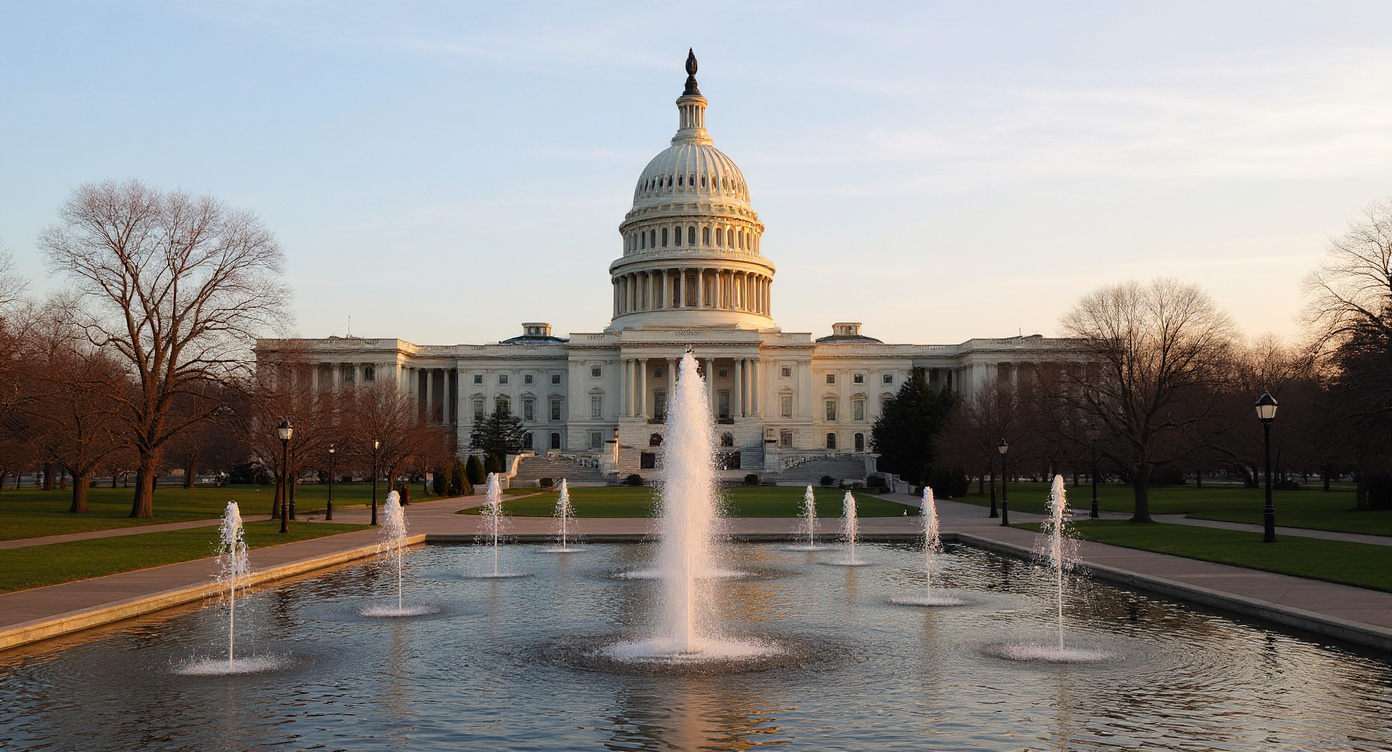
The restoration effort went beyond policing. Twenty-two fountains across the District have been restored. Twenty-eight statues — monuments that had been sitting under layers of grime and neglect while the city government allocated funds to everything except maintenance — have been cleaned and repaired. Metro ridership is up. Rail boardings on July 30 this year hit 518,390, compared to 492,689 on the same date last year. Bus ridership climbed from 352,249 to 360,031.
People are riding the subway again. In D.C. That alone should tell you something changed.
The homeless population decreased 9.3%, though total homeless individuals ticked up 4.4% — a number that reflects more people entering the shelter system rather than sleeping on sidewalks. The administration has committed $1.4 billion through January 2029 for National Guard deployment to maintain the gains, and requested $2 billion from Congress for continued cleanup and infrastructure.
Not everyone's thrilled. Critics point to the cost — including $100 million for a planned 250-foot Triumphal Arch between Memorial Bridge and Arlington National Cemetery. Which is an interesting objection from the same crowd that spent four years insisting the federal government paint murals to signal their support for the Black Lives Matter movement. Apparently that principle expires when the president doing the spending has an (R) after his name.
The political fallout in D.C. itself is worth noting. Janeese Lewis George, a self-described democratic socialist, is positioned as the likely next mayor. So the city that just watched federal intervention cut homicides by a third is preparing to hand the keys to someone who'd is running on a platform of defunding prisons and rolling back criminal penalties.
Twenty percent less crime. Thirty-two percent fewer murders. Fifty-three percent fewer stolen cars. Restored monuments. Rising transit numbers. That's the report card after one year of the policy every expert said would fail.
The experts have not issued corrections.