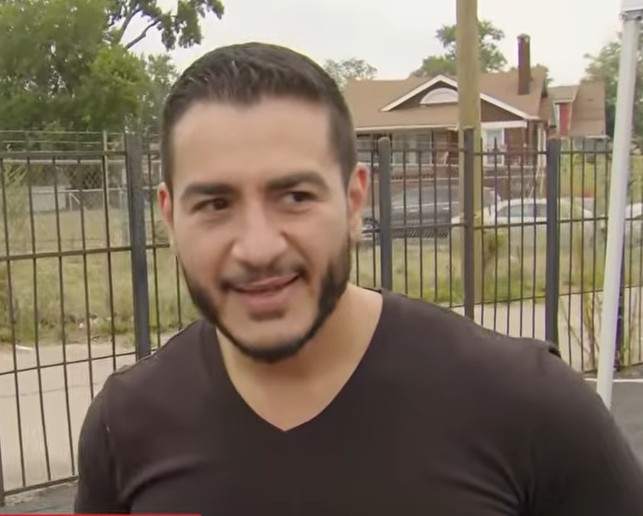
Less than two weeks before the 25th anniversary of September 11th, Michigan Democratic Senate candidate Abdul El-Sayed is watching his old tweets surface like crime scene photos. Specifically the ones where he used the murder of 3,000 Americans as political leverage for anti-war grievance politics.
His campaign's solution? Delete everything posted before July 2023 and hope nobody screenshotted.
Somebody screenshotted.
A 2020 tweet reframed the 9/11 attacks as a missed public health opportunity. El-Sayed wrote: "that means we'll spend the next ten years fighting a war for public health & against poverty … like we launched a global #WaronTerror after 9/11. We could save lives rather than take them." The framing is unambiguous — America's response to 3,000 dead civilians was the real problem.
His 2021 anniversary post was worse. El-Sayed wrote: "Today, I mourn the 3K lives, 6K injuries, & infrastructural devastation in NYC, perpetuated ignorantly in the name of my faith. Tomorrow, I'll mourn ~1M lives, millions of injuries, & infrastructural devastation in 3 countries, perpetuated ignorantly in the name of my country." A Senate candidate. On the anniversary of September 11th. Equating the attacks with American foreign policy.
When asked why the old posts were gone, his campaign said the deletion was done "to prevent any old posts from being taken out of context." Context. That's the word they went with. As if there's a charitable reading of those tweets just waiting to be discovered.
But the 9/11 tweets aren't even the most recent problem.
In March 2026, a Lebanese-born man drove a vehicle into a synagogue preschool in West Bloomfield, Michigan. El-Sayed condemned the attack — then immediately added that "violence is a cycle" and "hurt people hurt people." When the target is a Jewish preschool and the framing is that the attacker was operating within a cycle of pain, that's not a condemnation. That's an explanation. He later told the Michigan Jewish Democratic Caucus "I made a mistake" — while keeping his association with Hasan Piker firmly intact.
Piker is the socialist Twitch streamer who declared "America deserved 9/11" — he later walked it back — and who appeared at El-Sayed's campaign events. El-Sayed has been forced to publicly distance himself from Piker's remarks while declining to distance himself from Piker. That distinction matters more than the campaign would like. Michigan has more than 100,000 Jewish voters. The math on that is not complicated.
The campaign's answer to all of it is to begin searching for a Jewish community liaison — an outreach role described as an "olive branch" to Jewish officials in the state who have raised concerns. The search is still underway. No hire has been announced. The campaign is auditioning damage control, which means the damage isn't controlled.
Political observers have noted that no single tweet is likely to decide a general election. That analysis misses the point. This isn't about a specific tweet. It's about what five separate events in sequence reveal: the 9/11 revisionism, the synagogue attack contextualization, the Piker association, the mass deletion, and the Jewish liaison search that hasn't produced a hire. Each one alone might be survivable. Stacked together, they outline a candidate who held radioactive views, expressed them repeatedly across years, then began assembling props to prove he doesn't hold them — while keeping the people who share them close.
The "taken out of context" defense has a shelf life, and it expires the moment you delete the context. If those tweets were defensible, they'd still be up. If Piker's "America deserved 9/11" was just guilt-by-association, the campaign wouldn't be auditioning Jewish liaisons. If the synagogue comments were a genuine one-time mistake, the damage-control apology wouldn't have arrived two months before Election Day.
You don't begin a crisis rebrand eight weeks out because things are going well.