
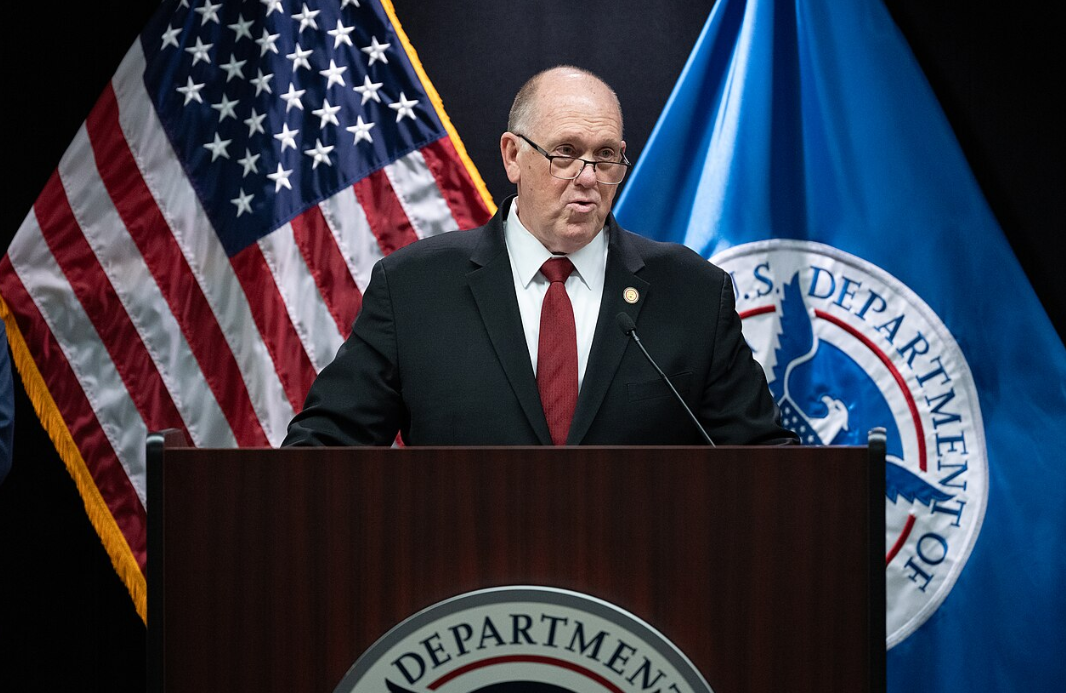
On August 30, CNN's Dana Bash sat across from Border Czar Tom Homan and tried the usual playbook — dramatic framing about deportation flights to Haiti, questions designed to make ICE sound like an occupying army. Homan's response wasn't a denial or a deflection. It was an invitation.
Put body cameras on every ICE officer. Let the American people see what they see.
That's not the response CNN was expecting. The network wanted Homan on defense, answering for images of enforcement operations in places like Danbury, Connecticut, where approximately 50 detentions in a single week had the local school district establishing alternate pickup plans for students. Dana Bash pressed on two deportation flights to Haiti over the previous two weeks, citing the country's severe violence as reason to halt removals.
Homan didn't flinch. "ICE has no intention of terrorizing children," he said. "That is just a political statement made to enrage." Then he pushed further — Americans should see "what ICE officers see." The conditions. The criminal histories. The trafficking networks. All of it, on camera, unedited.
Acting ICE Director David J. Venturella had already announced on August 8 that ICE would begin rolling out body cameras for officers, with the program targeting full deployment by the end of August. The timing of Homan's CNN appearance made the point sharper — this wasn't a hypothetical. DHS is actually doing it.
The media has spent years framing immigration enforcement through a single lens: the moment of arrest. The crying child. The frantic family. Never what preceded it — the criminal record, the prior deportation, the trafficking operation, the re-entry after removal. Body cameras capture the whole encounter, not just the thirty seconds that make a useful cable news segment.
Sen. Chris Murphy and other critics have pushed the narrative that enforcement operations are terrorizing communities. That framing works exactly as long as the public only sees what CNN chooses to show them. A body camera doesn't editorialize. It doesn't cut to commercial. It records.
Homan's challenge to CNN exposed a contradiction that the network couldn't resolve on air. Media outlets have demanded police body cameras for years — accountability, transparency, the public's right to know. ICE proposes the exact same thing, and the reaction is silence or suspicion. The principle didn't change. The target did.
Every institution that has adopted body cameras — local police, highway patrol, federal agents — found the same result. The footage usually supports the officers. Not always, and that's the point. Accountability works in both directions. But the overwhelming pattern is that what the camera shows doesn't match what the activist describes.
Homan offered CNN exactly what they claim to want. A camera on every badge, every encounter, every door knock. Full transparency, no filter.
Turns out the network's interest in transparency has a few conditions attached.