
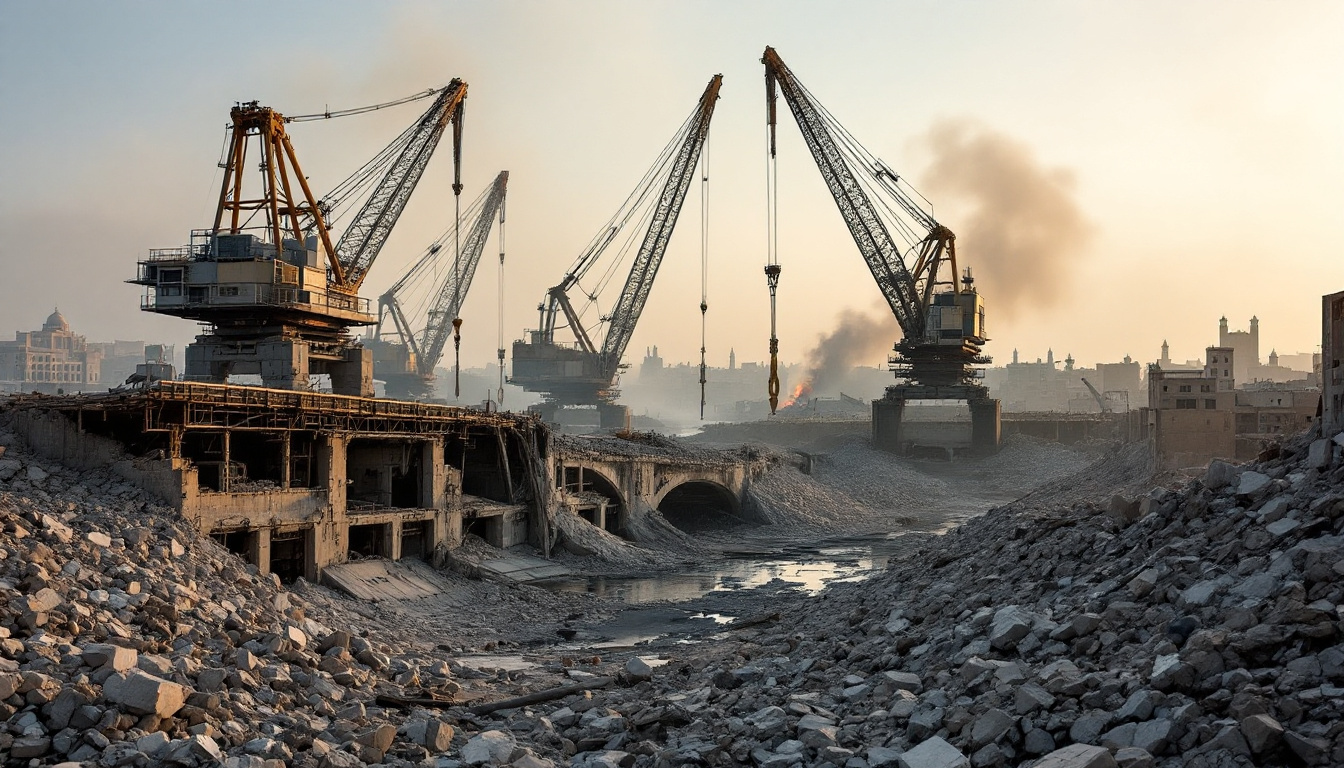
Iran's Roads and Urban Development Minister Farzaneh Sadegh went on state television this week and admitted what everyone already knew: American strikes destroyed the country's ports, border terminals, bridges, roads, railways, and logistics facilities. She didn't sugarcoat it. The infrastructure damage was, in her own government's assessment, significant.
Then Iran launched a surprise attack on a U.S. base.
So to recap the military strategy here: get hit, go on television and admit how badly you got hit, then try a sucker punch. This is not Sun Tzu. This is a bar fight where you announce your broken ribs to the room and then swing at the bouncer.
The backdrop is a memorandum of understanding that was supposed to produce a ceasefire. The deal included a 30-day window for Iran to restore safe commercial vessel traffic through the Strait of Hormuz. Secretary of State Marco Rubio was blunt about where things stand. "The MOU does not give them the right to launch drones and missiles against commercial shipping vessels," Rubio said. By day 21 or 22 after the MOU was signed, the U.S. had resumed airstrikes — because Iran couldn't stop threatening international shipping lanes for even a month.
Iranian Foreign Ministry spokesman Esmaeil Baqaei tried the diplomatic angle. "The entire world expected that this time, at least, the United States would fulfill its commitments," Baqaei said. He added: "Iranians have never sought war. We were attacked and forced to defend ourselves."
That's a fascinating way to describe launching drones at commercial ships in an international waterway. "We were forced to defend ourselves" — against container ships carrying consumer electronics and grain. Brave stuff.
The Iranian military, not to be outdone in the rhetoric department, issued a statement vowing to "cut off the feet of any aggressor that steps on even an atom of the homeland's soil." That's the kind of language that sounds impressive right up until you remember that the ports those aggressors would theoretically step onto are, by your own government's admission, rubble.
Iranian President Masoud Pezeshkian has been navigating between the hardliners demanding escalation and the reality that escalation has gone poorly every single time. Pakistan, Oman, and Qatar have all served as mediators for back-channel communications between Tehran and Washington. Three separate countries are needed just to pass notes because Iran can't pick up the phone without threatening to wipe something off the map first.
The pattern here isn't new. Iran signs an agreement. Iran violates the agreement. The U.S. responds. Iran admits damage. Iran retaliates anyway. The U.S. responds harder. Then Iran asks why the U.S. won't honor its commitments. It's a cycle that only looks confusing if you assume Iran has a coherent long-term plan.
What they have is a regime that needs to project strength domestically while absorbing real losses internationally. The infrastructure admissions weren't an accident — Sadegh's comments set up a narrative for domestic consumption: we're victims, the Americans broke their word, rally around the flag. The surprise attack serves the same purpose. It doesn't need to succeed militarily. It just needs to exist so state television can run footage.
The U.S. and Saudi Arabia followed up with joint strikes on Iran-backed terror targets in Iraq, which tells you everything about how seriously anyone in the region takes Iran's "surprise" offensive capability.