
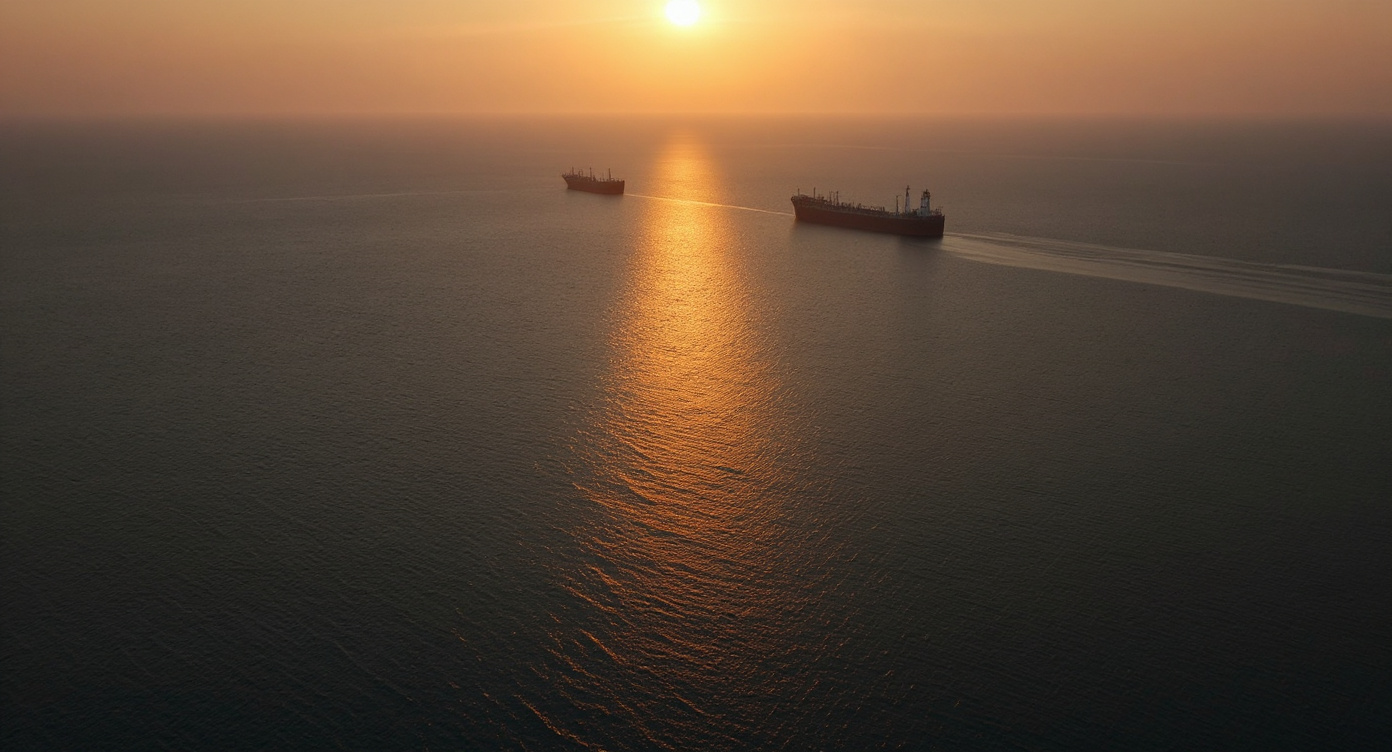
Sometime Tuesday, approximately 25 million barrels of crude oil moved through 15 ship-to-ship transfers in the Strait of Hormuz. Over the past month, more than 500 ships have passed through the southern channel. Nobody shot at them. Nobody threatened them. Nobody mined the water beneath them.
That last part is new.
President Trump announced on Truth Social that the U.S. Navy had completed the removal of all mines from the strait — over 100 suspected devices identified by months of underwater drone scanning, then removed and detonated by Navy teams and private contractors. The operation cleared the Traffic Separation Scheme, the principal shipping corridor through which roughly one-fifth of the world's oil and liquefied natural gas normally transits. Trump simultaneously declared a "Zero Tolerance" policy on any future mine placement.
As one U.S. official put it: "The Iranians have lost control over the strait. Now the U.S. controls it."
That single sentence represents the collapse of Iran's most important piece of strategic leverage. For decades, Tehran's fallback threat in every negotiation was the same — cross us and we shut down Hormuz. Every barrel of oil, every LNG tanker, every cargo ship that moves through that waterway did so with Iran's implicit permission. That permission has been revoked — not by Iran, but by the United States Navy.
The mine clearance is one piece of a broader campaign. Treasury Secretary Scott Bessent has been working behind the scenes to economically asphyxiate the Iranian regime. The Treasury Department launched Operation Economic Outcast, a sanctions offensive that State Department spokesman Tommy Pigott said is focused on "cutting off every financial lifeline the regime has remaining." Kharg Island, Iran's principal oil-export hub, sits largely idle. Three nuclear sites have been destroyed. And now their mines are gone.
Another U.S. official framed the current posture bluntly: "Right now we are not negotiating with Iran. We are squeezing them."
The diplomatic track tells the same story from the other side. Secretary of State Marco Rubio, War Secretary Pete Hegseth, and White House envoys Steve Witkoff and Jared Kushner have been coordinating a multi-front pressure campaign. Iran has been trying to negotiate through Oman — Omani Foreign Minister Badr Albusaidi called the discussions "constructive" — but roughly three months of Iranian negotiating effort just became irrelevant. Iranian Deputy Foreign Minister Kazem Gharibabadi insisted Tehran would not consider the strait "fully reopened" without lifting the economic blockade. Which is another way of saying: they know they've lost the strait and they're trying to trade its acknowledgment for sanctions relief they aren't going to get.
The Space Force is now surveilling every square inch of the waterway. The Navy has the corridor cleared and patrolled. The financial noose is tightening. Iran's negotiating position has gone from "we'll shut down global energy" to "please stop squeezing us" in a matter of months.
For retirees watching energy markets — and anyone whose portfolio includes oil, gas, or shipping exposure — this is the kind of geopolitical shift that actually moves prices. Stable passage through Hormuz means stable energy supply chains. Stable supply chains mean predictable costs. That's not a talking point. That's how global commodity pricing works when one country stops being able to hold a chokepoint hostage.
Iran spent decades building a minefield and calling it foreign policy. Trump sent the Navy to clean it up and called it Tuesday.