
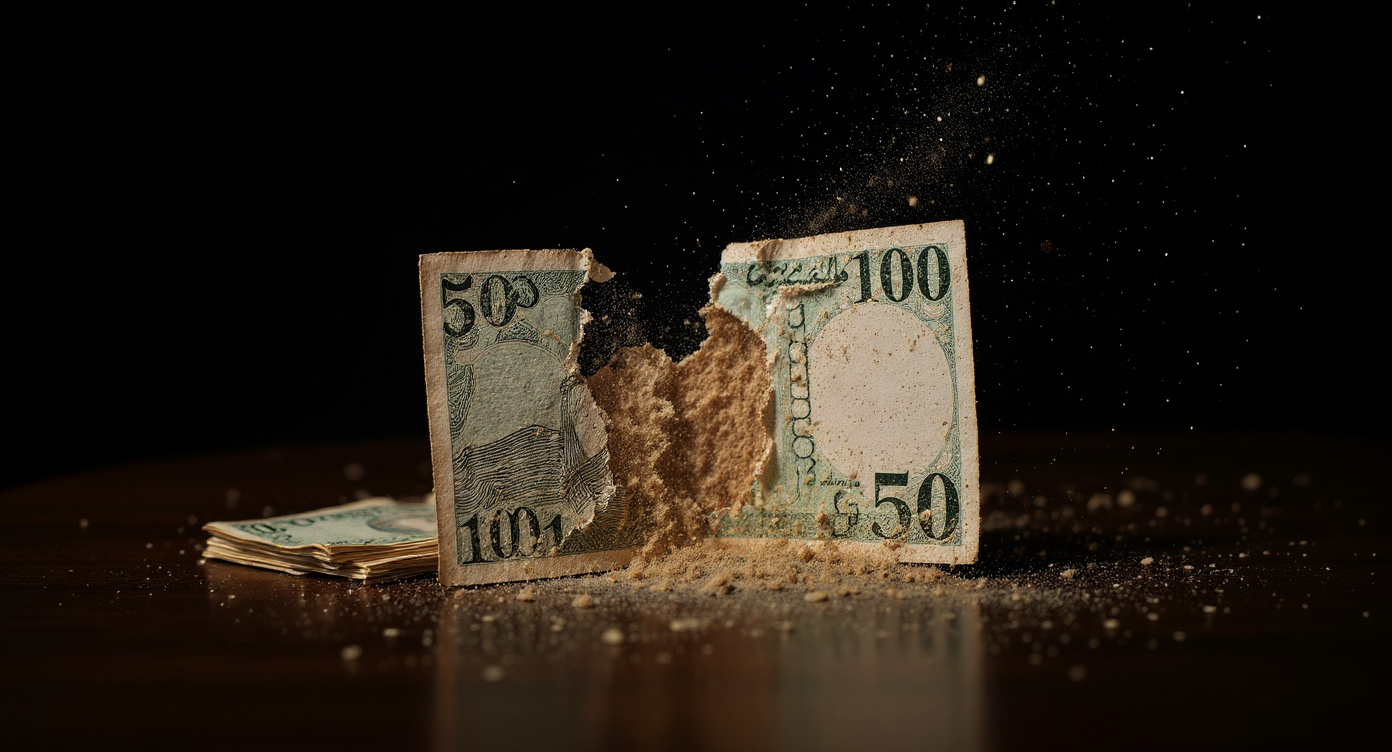
The Iranian rial hit 2.02 million to one U.S. dollar on Monday — a record low — after Treasury Secretary Scott Bessent unveiled "the single greatest financial offensive ever" launched against a foreign government. The operation has a name: "Operation Economic Outcast."
Iran's central bank director, Abdolnaser Hemmati, admitted that oil exports have "fallen to zero" due to the American blockade.
Bessent didn't mince words in announcing the new sanctions regime, declaring that "President Trump has decimated Iran's economy to a point where the rial has never been weaker." The sanctions target every remaining artery of Iranian commerce — petroleum trade and transport, financial flows through exchange houses and free trade zones, Iranian flight operations, seaborne fuel transfers, and illicit banking channels. Bessent also fired a direct warning at enablers abroad: "Iran's enablers purchase and transport its petroleum... all while concealing complicity." The message to Beijing was unmistakable.
Bessent added that "those who sever Iran's remaining financial and commercial connectivity will reinvigorate their own" — a carrot-and-stick approach that gives fence-sitting nations a financial incentive to comply. President Trump, never one for understatement, posted his own assessment: "IRAN IS COMPLETELY COLLAPSING!!!"
This latest blow lands on top of Operation Epic Fury, which began on February 28 and has already inflicted an estimated $300 billion in damage to the Iranian economy. The International Monetary Fund projects Iran's economy will contract 5.4 percent by the end of 2026, with inflation hitting 70 percent. For context, Iran's economy hasn't managed more than one percent quarterly growth in the past twenty years even without maximum pressure sanctions.
The regime's response has been predictably theatrical. Mohsen Rezaei, leader of Iran's Supreme National Security Council, declared on Sunday that "if (Trump) wants to do something, we will retaliate in a seismic manner" and insisted "our hands are not tied." Foreign Ministry spokesman Esmail Baqaei warned that "any escalation of this situation will undoubtedly bring about consequences." Strong words from a government whose currency lost ten percent of its value in two weeks and whose central bank chief just admitted they can't sell a barrel of oil.
Hemmati tried to wave away the rial's collapse as "temporary." That's an interesting characterization of a currency that's been in freefall since January, when a popular uprising saw thousands killed by the regime and an internet blackout that cost an additional $250 million per day in economic damage.
The backdrop here matters. Iran squandered the windfall from Obama's 2015 nuclear deal funding terrorist proxies across the Middle East instead of stabilizing its own economy. Years of corruption, mismanagement, and proxy warfare spending hollowed out whatever was left. Operation Economic Outcast isn't breaking a healthy economy — it's kicking out the last supports under a rotting one.
The rial was at 1.53 million to the dollar when Epic Fury started in February. It was at 1.4 million during the January uprising. Now it's past two million. The central bank's official valuation still claims 1.5 million, which tells you everything about how seriously you should take official Iranian economic data.
A regime that can't sell oil, can't stabilize its currency, and can't stop its people from revolting doesn't "retaliate in a seismic manner." It negotiates or it collapses. Those are the only two doors left, and Operation Economic Outcast just nailed one of them shut.