
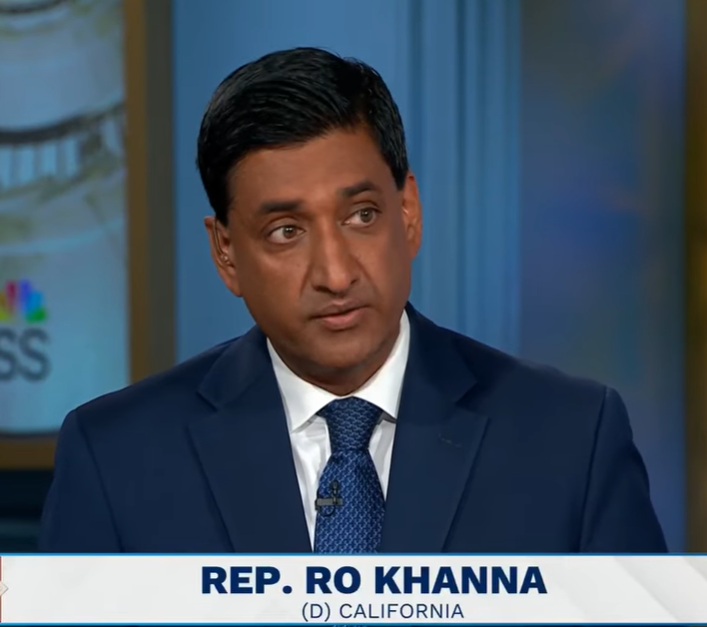
Democratic Congressman Ro Khanna says he was "detained illegally" by Israeli settlers and military in the West Bank. The Israeli ambassador says Khanna's office never even bothered to properly coordinate the visit — and the Israeli Defense Force showed up not to detain him, but to get him out of a closed military zone where he wasn't supposed to be.
Khanna waited from Wednesday until Saturday to go public with his version. That's a long time to sit on an international incident involving a sitting U.S. congressman — unless, of course, you're workshopping the narrative.
Israeli Ambassador Michael Leiter appeared on CBS with Margaret Brennan and didn't just push back on the story. He took it apart piece by piece. According to Leiter, Israeli officials had proactively offered Khanna briefings, meetings with October 7 terror attack survivors, and security briefings before his trip. Khanna's office ignored all of it. Instead, they made a basic visa inquiry and then toured with Palestinian activists in a restricted zone.
"Maybe this would not have happened if he had coordinated properly," Leiter told Brennan, with the understated delivery of a man holding all the receipts.
Israeli police confirmed the location was a closed military zone where civilians shouldn't have been present in the first place. The IDF arrived to resolve the situation, not to arrest anyone. So the entire premise of Khanna's complaint — that he was illegally detained — collapses the moment you ask why a congressman was wandering through a restricted military area without prior authorization.
Khanna fired back on social media with the kind of righteous indignation that plays well with his base: "If a US Congressman & American citizens were detained illegally by settlers & the military of any other nation, the Ambassador would beg the American people for forgiveness and take action against the perpetrators. The height of arrogance."
That's a compelling statement — right up until you learn the ambassador's office offered him every courtesy before the trip and got nothing back. It's hard to play the victim of diplomatic failure when the diplomats were the ones trying to set up the meeting.
Then Leiter landed the real blow. He suggested the whole spectacle might have more to do with Khanna's domestic political problems than anything that happened in the West Bank. "Maybe this had more something to do with his support of Graham Platner beforehand, and the difficulties he had with that. Trying to shift the focus to something else, perhaps?" Leiter asked.
Leiter also wondered if Khanna might be using the incident "to declare a presidential run" — a reference to 2028 ambitions that Khanna hasn't exactly been hiding.
The pattern here is familiar. A congressman bypasses standard diplomatic channels, puts himself in a situation that predictably goes sideways, then frames the predictable result as an outrage. The goal isn't to solve anything. The goal is the clip. The clip gets him media time and a chance to make him known internationally, instead of to the small number of voters he represents in his district in California.
The difference this time is the ambassador showed up with the timeline, the coordination records, and enough composure to let the facts speak louder than the accusation. When the best response to a detailed rebuttal is "the height of arrogance," the rebuttal probably landed.