
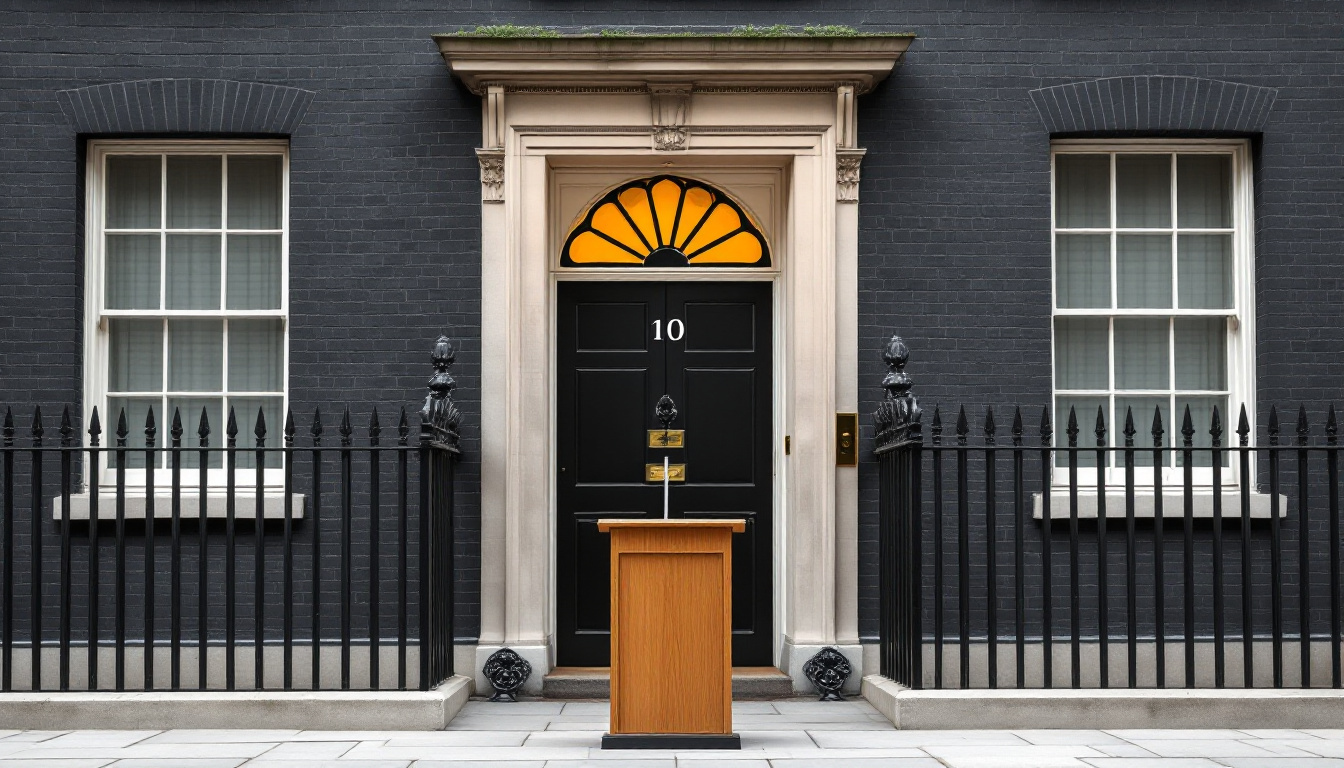
British Prime Minister Keir Starmer announced his resignation as leader of the Labour Party on Monday morning, ending a government that lasted just over two years before collapsing under the weight of cabinet walkouts, a defense funding crisis, and a backbench revolt his own party couldn't contain.
Starmer's fall had been building for weeks. It began on June 12 — "Bloody Thursday" — when Defence Secretary John Healey and Armed Forces Minister Al Carns resigned in rapid succession. Healey said on his way out: "You have been unable, and the Treasury has been unwilling, to commit the resources that the nation needs." Carns added: "We are asking our Armed Forces to operate in a more dangerous world on a budget written for a calmer one."
When your own Defence Secretary says the government cannot fund the military during a global security crisis, the political diagnosis writes itself.
By June 21 — "Bloody Sunday" — reports confirmed Starmer was preparing his exit. Seven ministers had resigned in a single month. More than 200 Labour MPs were allegedly prepared to back a leadership challenge. The man who won a landslide victory in 2024 couldn't hold his own party together long enough to reach a second anniversary.
Starmer confirmed his resignation Monday with characteristic understatement: "The question my party is asking now is whether I am best placed to lead us. I will resign as leader of the Labour Party." He will remain as Prime Minister until the party's leadership contest concludes, expected sometime in September before Parliament returns.
Nigel Farage and his Reform UK party — a right-wing populist movement surging in national polls and positioning itself to replace the Conservatives as Britain's main opposition — moved immediately. "Reform demands an election, and we are ready to deliver radical change," Farage declared, warning Labour against internal maneuvering: "If Labour thinks it can shove another professional politician into No 10, it has another thing coming." Farage reportedly consulted with King Charles about the constitutional path forward. Under the British constitution, the King has discretion over whether to call a general election or invite another party to form a government — a decision that could bypass the Labour leadership contest entirely. The Conservative Party, still rebuilding under new leader Kemi Badenoch after their historic 2024 defeat, has largely been sidelined in the immediate chaos.
The most likely successor is Andy Burnham, Mayor of Greater Manchester, who won the Makerfield by-election and is now heading to Westminster. Burnham had left Parliament in 2017 to become mayor — a move that required him to win back a parliamentary seat before he could be eligible to lead the Labour Party or serve as Prime Minister. He has built his reputation on NHS advocacy, working-class politics, and a more populist style than Starmer's technocratic approach. Where Starmer governed from the professional center-left, Burnham positions himself as the antidote to Labour's drift away from its traditional industrial base — anti-austerity, pro-public sector, and with a regional credibility Starmer never convincingly projected. He is still firmly on the left. He is simply a different version of it.
For the United States, a Burnham government would mean continuity in some areas and real uncertainty in others. The UK's NATO commitments, Five Eyes intelligence arrangements, and foundational alliance with Washington survive any change in No 10. But the working relationship between Burnham and the Trump administration would start from a colder baseline than most recent UK-US pairings. Burnham's economic populism and skepticism of market-driven trade frameworks put him at a distance from the Trump agenda, and without the alignment that drove warmer periods of the special relationship, the two governments would be operating more on institutional habit than shared political purpose.
Starmer won by a landslide on the promise of serious, competent governance after years of Conservative chaos. Within two years, his cabinet was walking out and his party was in open revolt. Justin Trudeau won a majority in Canada on similar terms and resigned in January. Olaf Scholz's coalition in Germany collapsed last fall. Starmer followed the same arc in less time than either.
The only difference is the accent.