
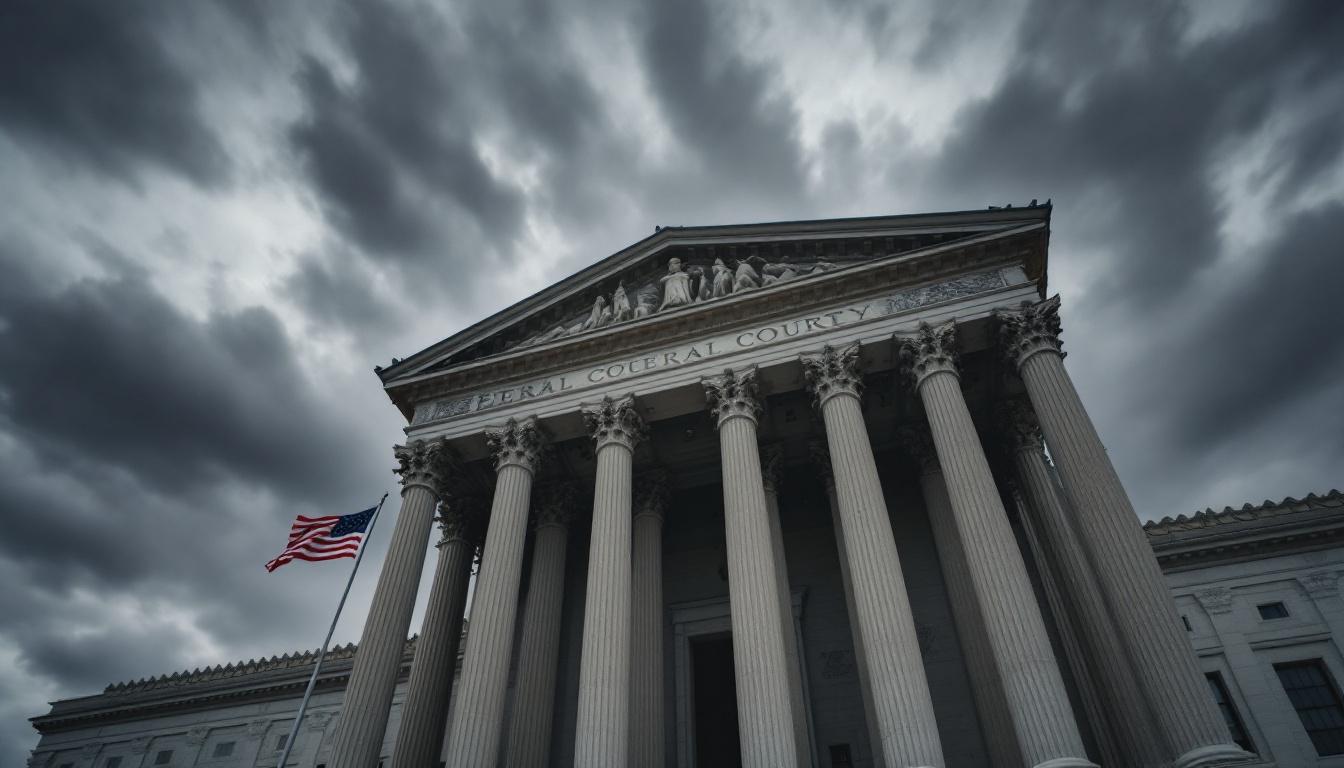
Krystle Perry is the sole breadwinner for her family. Her husband Anthony is totally disabled. Their children attend the West Virginia Virtual Academy — a remote school where the kids never set foot in a classroom. The state still demanded they get vaccinated to log in to their laptops, and when the Perrys objected on religious grounds, a federal appeals court told them their faith didn't matter enough to warrant serious legal protection.
The Supreme Court already ruled on this. The lower courts just don't care.
In April 2026, a split panel on the 4th U.S. Circuit Court of Appeals applied what's called the "rational basis" standard to the Perrys' case — Perry v. Marteney — which is legal shorthand for "the government wins automatically." That's the lowest level of judicial scrutiny available, and it was applied to a constitutional right the Supreme Court has repeatedly said deserves the highest protection. Judge Paul Niemeyer dissented, but he was outnumbered.
The Perrys' petition to the Supreme Court put it plainly: "The misreading is taking root and growing. This Court should intervene now before the lower courts bear more bad fruit."
They're not the only ones watching the rebellion spread. In June 2026, the 2nd Circuit re-upheld New York's school vaccine mandate despite the Supreme Court setting aside a related ruling just months earlier in December. An Orthodox Jewish petitioner named Daniel Grand challenged the mandate with the backing of more than 50 federal lawmakers and 14 states. The court upheld the mandate anyway.
Then there's the gender secrecy front. In the Mirabelli case, courts in the 6th and 9th circuits have defied the Supreme Court's ruling in Mahmoud v. Taylor — the Montgomery County Public Schools decision affirming that parents have a fundamental right to direct their children's upbringing. Schools in California and elsewhere are actively hiding children's gender transitions from their parents, and federal judges are providing legal cover for it.
John Bursch, Vice President of Appellate Advocacy at the Alliance Defending Freedom, framed the absurdity: "Our country was founded on the promise that people of faith should be free to exercise their deeply held beliefs. It makes no sense to deny an exception to a student attending virtual school."
He's right, but the problem goes beyond one case. What's happening across multiple circuits is a coordinated pattern of judicial resistance. Lower court judges are treating Supreme Court precedent on parental rights as a suggestion — something to be acknowledged in footnotes and ignored in rulings. The rational basis test gets applied where strict scrutiny is required. Binding precedent gets reinterpreted into irrelevance.
And who benefits from the chaos? Democratic attorney Marc Elias, chair of Democracy Forward, has been at the center of legal strategies that exploit exactly these kinds of circuit-level disagreements. The Harvard Law Review published a critical essay in its May edition — Volume 139 — questioning the scope of religious liberty protections in vaccine mandate cases. The intellectual framework for defiance is being built in real time.
The Supreme Court can issue all the rulings it wants. If lower court judges simply refuse to follow them — and face no consequences for doing so — then the rulings are decorative. Parents like the Perrys aren't asking for special treatment. They're asking for the constitutional protections the highest court in the country already said they have.
Fifty lawmakers and fourteen states lined up behind Daniel Grand. Multiple circuits are in open conflict with settled precedent. The petition language warns of bad fruit.
The fruit's already on the ground. The question is whether anyone plans to pick it up.