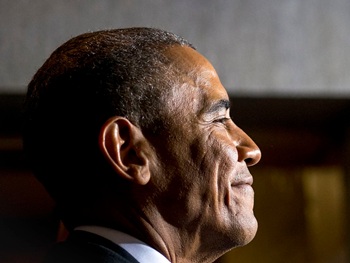
Barack Obama and a fresh rotation of Democratic leaders have launched a coordinated campaign warning that artificial intelligence poses an existential threat to humanity. The timing — eight weeks before the 2026 midterms — is, we are assured, entirely coincidental.
The NY Post's editorial board is not assured.
The Post published a sharp editorial on September 13 comparing the Democratic AI panic to the climate scare playbook that's been running since Al Gore's first PowerPoint presentation. The pattern is identical: identify a complex technology most voters don't fully understand, declare it an existential threat, then propose sweeping government regulation as the only solution. The editorial calls it "suspiciously timed" and notes that the proposed remedies all involve expanding federal authority over the private sector — which, by pure coincidence, is also the Democratic Party's answer to climate change, COVID-19, social media, and whatever crisis is scheduled for 2028.
Obama has been building toward this for months. His public statements on AI have steadily escalated from "we should be thoughtful" to something closer to "the robots are coming and only Washington can save you." The framing is deliberate. AI isn't presented as a tool that needs sensible guardrails. It's presented as a civilization-ending force that requires massive new bureaucratic infrastructure to contain — infrastructure that, conveniently, would give the federal government oversight of the most powerful technology sector in the American economy.
The climate playbook worked for two decades. Declare a crisis. Fund the research that confirms the crisis. Propose regulations that expand government power. Attack anyone who questions the timeline or the models as a "denier." Repeat until the regulatory apparatus is so large it becomes self-sustaining regardless of whether the original predictions pan out.
The AI version follows the same sequence. The "existential risk" language is borrowed directly from climate activism. The calls for international regulatory frameworks echo the Paris Agreement. The insistence that "we're running out of time" creates the same artificial urgency that justifies bypassing normal legislative debate.
The fear campaign doesn't start with evidence of actual harm. It starts with hypothetical scenarios — AI could displace millions of jobs, AI could be weaponized, AI could undermine elections. Each scenario is real enough to sound plausible and vague enough to resist disproof. That's the feature, not the bug. A threat you can't measure is a threat you can never declare solved, which means the regulatory authority never sunsets.
Climate was going to kill us. COVID was going to kill us. Social media was going to destroy democracy. Now AI is going to end civilization. The through-line isn't the threat. It's the prescription. Every single one of these crises required the same medicine: more federal agencies, more regulatory power, more control over private industry, and less patience for anyone who asks to see the data before signing the blank check.
Obama understands that midterm voters don't turn out for policy papers. They turn out for fear. And the AI apocalypse narrative offers something the climate narrative lost — novelty. Voters under 40 have heard "the planet is dying" their entire lives. The AI scare is fresh. It's new enough to generate real anxiety and technical enough that most people can't evaluate the claims independently. That's the sweet spot for political exploitation.
The 2026 midterms are eight weeks away. The AI apocalypse arrived right on schedule.