
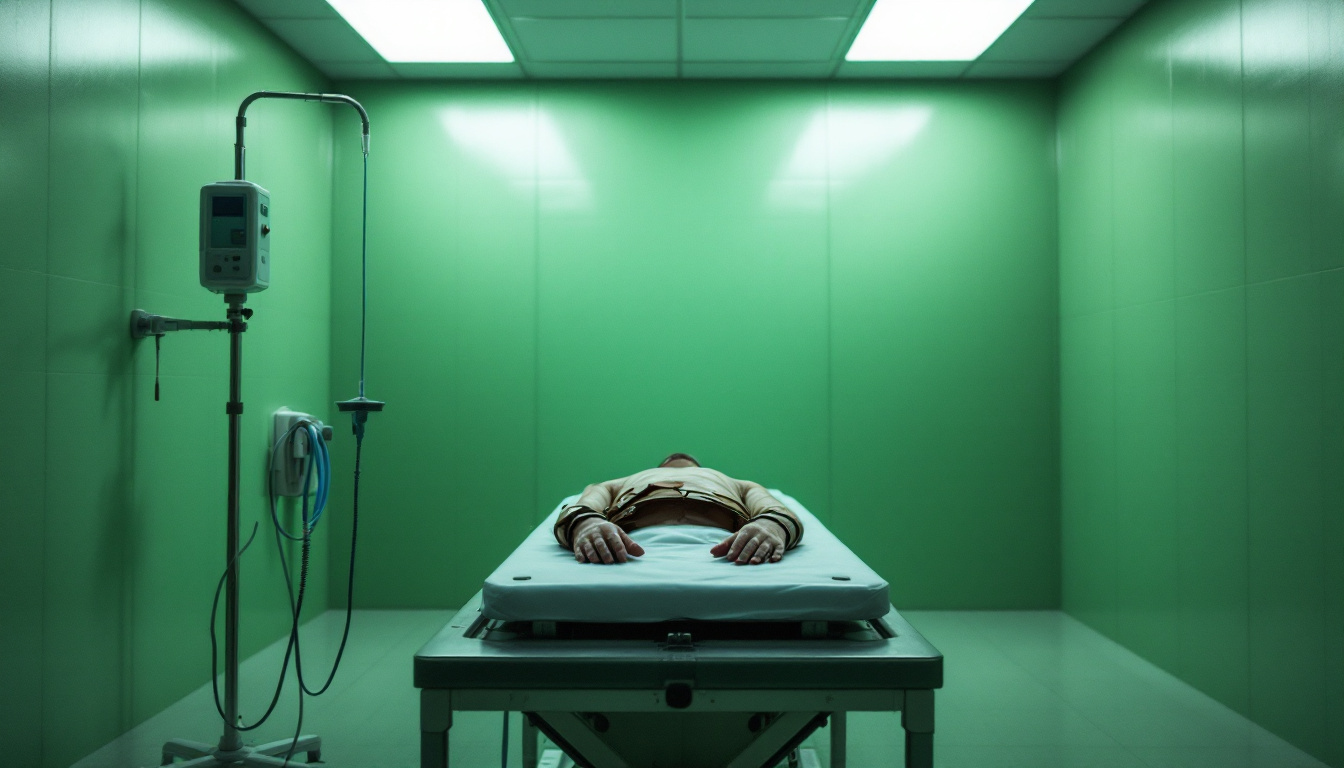
The doctor who oversaw Christa Pike's execution has now confirmed what went wrong.
The IV line had not been properly placed in her vein, Dr. Mark Fowler said, so the lethal drug went into the tissue of her arm instead. He was called into the chamber about 45 minutes in, let the drug run another 30 minutes, then ordered oxygen and sent Pike to a hospital.
She survived. Now her lawyers want Tennessee to spare her life for good.
Before anybody feels sorry for Christa Pike, remember why she was on that gurney.
On January 12, 1995, Pike, 18, and two other Job Corps students lured 19-year-old Colleen Slemmer behind a steam plant on the University of Tennessee's agriculture campus in Knoxville. Pike was jealous. She thought Slemmer was interested in her boyfriend.
They beat and tortured Slemmer. Pike carved a pentagram into her chest. When it was over, Pike took a piece of Slemmer's skull and kept it as a souvenir.
Pike confessed. A jury convicted her of first-degree murder, and a judge sentenced her to death. That was 31 years ago.
Colleen Slemmer would be 50 now. People who knew her remember a computer geek with a nurturing heart. Her family has spent three decades waiting for the sentence to be carried out. "It shouldn't have taken 31 years," her niece said before the execution.
On September 30, it was finally supposed to happen. It didn't.
Now Pike says she's in constant pain. Her lawyers say she came down with pneumonia and a blood clot, and they're asking the state to commute her sentence to life in prison.
The woman who carved a pentagram into a 19-year-old's chest and kept a piece of her skull is asking Tennessee for compassion.
Gov. Bill Lee isn't playing along. On Thursday he said Pike will likely face another execution. He has paused executions while an outside review figures out exactly what went wrong. He's fixing the process and keeping the sentence.
A failed procedure doesn't change what Pike did, and it doesn't make the jury wrong. When a prison bus breaks down on the way to a facility, nobody suggests letting the prisoner go. The state fixes the bus.
Pike's lawyers are counting on people looking at a woman in a hospital bed and forgetting how she got there. Colleen Slemmer never made it to a hospital. No lawyer ever argued for her comfort. A piece of her skull ended up as somebody's keepsake.
The review will sort out what went wrong with the IV. Nothing in it will change what happened behind that steam plant in 1995.
Tennessee should get the procedure right, and then carry out the sentence a jury handed down 31 years ago.