
On August 18, about 20,000 people crossed by land from Russia into Georgia, roughly three times the usual number for a single day. In one week, more than 113,000 Russians went through the Upper Lars mountain checkpoint alone.
The Kremlin insists no new mobilization is coming. The lines at the border show that a lot of Russians don't believe it.
Young Russian men are leaving in growing numbers, convinced that Vladimir Putin is about to call up another wave to feed a war in Ukraine that has dragged on for more than four and a half years. They're heading for Georgia, Armenia, Kazakhstan and Turkey, anywhere that will take a Russian passport without a visa. Rents in parts of Armenia have jumped 30 to 50 percent since spring as the newcomers arrive.
Dmitry, a 35-year-old advertising worker from Moscow, left on September 18, the first day of Russia's parliamentary elections. He wrote "criminal" across his ballot, then flew to Istanbul. "It's hard to believe your own state can just suddenly send you off to be slaughtered," he said, "but we've already seen it happen."
After the votes were counted, Putin announced that the turnout showed "the people of Russia support our efforts aimed at strengthening the country."
The groups that help Russians escape can barely keep up. Kovcheg, which helps Russians build new lives abroad, says inquiries have increased eightfold since July. Idite Lesom, a volunteer network whose name roughly translates to "Get Lost," says requests for help are up 50 percent since spring. According to Kovcheg founder Anastasia Burakova, this wave is better prepared than the one in 2022. People are lining up documents, savings and apartments before any order comes down.
They've learned from experience. Russia has told its men before that they wouldn't be sent to fight. In the first weeks of the 2022 invasion, the Kremlin promised conscripts wouldn't go to Ukraine, then the Defense Ministry admitted they already had. That September, Putin ordered 300,000 reservists into the war. In 2024, when Ukrainian forces pushed into Russia's Kursk region, they captured young conscripts who weren't supposed to be anywhere near the fighting.
Sergei Rasokhin is a Russian soldier who deserted and escaped to Armenia. "You were deceived," he said. "They will take you to the front line with 95 percent certainty." Desertion in wartime can now bring up to 15 years in a Russian prison, and Rasokhin chose to risk it.
Once a man is in, he may never get out. Military contracts can now be extended for as long as the war lasts. That's why so many men are running before they're caught.
Putin has made sure the war never runs short of bodies. He scrapped Russia's old twice-a-year draft and replaced it with year-round conscription, with a target of 261,000 men for 2026. Draft notices now arrive electronically, and the moment a man's name shows up in the government's registry, he's banned from leaving the country. Recruiters have been leaning on students and unemployed men with threats and false promises. In the city of Penza, residents formed groups to protect local men from being dragged off to military offices.
The Kremlin keeps raising the price of a soldier. It offers bigger signing bonuses, higher military pay and family benefits to anyone who will enlist. When a country has to keep raising the bounty to fill its army, the volunteers have stopped coming.
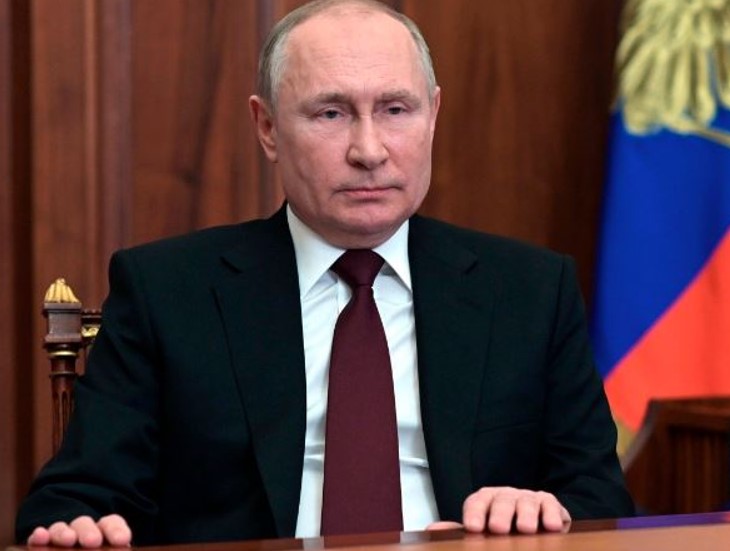
Putin's answer to all of it was a denial. "That's utter rubbish," he said of the mobilization fears. "It's an information attack on Russia."
Thousands of Russians at the border with their bags packed don't look like an information attack.
Russia is losing these men twice. By Ukraine's count, Russia lost a record 46,230 soldiers in September alone. Putin has had to bring in North Korean troops to fill the gaps, and a country that's winning a war doesn't need to borrow soldiers from Kim Jong Un. The men who aren't dying at the front are packing up and leaving. They're the engineers, programmers, tradesmen and young professionals Russia needs to run its economy for the next thirty years, and they've decided they're better off anywhere else.
Meanwhile, the war has come home. Ukrainian drones have struck deep inside Russia this year, shutting down airports and cutting fuel supplies in some regions. Russians are dealing with fuel shortages at home while their government drafts their sons.
The 2022 mobilization set off the first wave. The year-round draft set off the second. Both times, the Kremlin said there was nothing to worry about, and both times, Russia's young men packed up and left.