
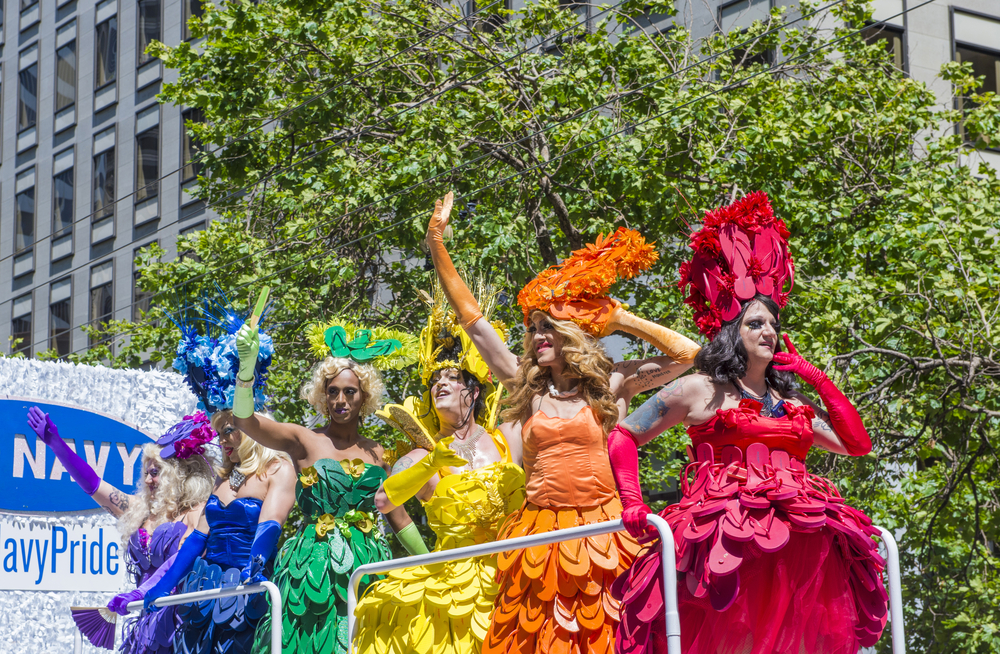
Stanford University — where annual tuition costs more than most people's houses — just allocated $50,000 to a student drag performance troupe. The campus veterans group? They got $10,000. That's a 5-to-1 ratio, folks, and it tells you everything you need to know about what America's elite universities actually value.
Men in sequined gowns and wigs: fifty grand. People who actually served their country: here's a fifth of that, now sit down.
The numbers, obtained from grant documents by the Washington Free Beacon and reported by The College Fix, show the Associated Students of Stanford University — known as ASSU — handled the funding allocations through a student-led process. The Stanford Undergraduate Association of Veterans got their $10,000 with an 88% approval rate from student voters. The drag troupe? They pulled 84% approval and five times the cash. So the veterans were actually more popular, yet got crushed in funding. Math is hard at Stanford, apparently.
But wait — it gets better. The Muslim Student Union received $175,000. The Stanford Republican club got $7,500. Let that sink in. The Republicans got less than the veterans, who got less than the drag performers, who got less than a third of what the Muslim Student Union pulled down. This is Stanford's version of a merit-based system.
Stanford's Director of Media Relations, Luisa Rapport, offered the kind of corporate non-answer that PR departments have been perfecting since the invention of the press release. "Student organizations make requests for specific amounts each year, which are considered by ASSU. ASSU then makes recommendations based on those requests, and they are voted on by the student body," she said. She also noted that Stanford has "more than 600 student organizations" and that "allocations can vary from year to year based on many factors."
Translation: don't blame us, the students voted for it. Which is technically true and completely misses the point.
John Sailer, Director of Higher Education Policy at the Manhattan Institute, nailed what's actually happening here. "It's a familiar story: students are recruited for their interest in social justice, group identities, and activism and then — surprise! — they build a campus culture obsessed with social justice, group identities, and activism," Sailer said. In other words, the university creates the culture, then hides behind "student choice" when the culture produces absurd outcomes.
Sailer also pointed out the built-in flaw with popularity-based funding. "To some extent, that makes sense, as there's no reason to give a ten-person organization the same resource thousand-person organization. But this suggests that whatever is most popular is most worthwhile." And at a school that charges $240 per quarter in student activities fees, you'd think somebody would ask whether the people paying those fees actually want their money spent this way.
Every undergraduate at Stanford is forking over $240 a quarter in activities fees — that's the pot these allocations come from. So when a kid whose grandfather stormed Normandy pays his fees thinking some of that goes to support fellow veterans on campus, he gets to find out a drag show got five times the investment. Welcome to higher education in 2026.
This is the part where someone will say "it's just student government funding, it doesn't matter." It matters because it's a mirror. Stanford isn't some backwater community college — it's one of the most prestigious universities on the planet, a factory for future senators, CEOs, and Supreme Court clerks. And the values baked into its campus culture today become the values running your country tomorrow.
Fifty thousand for drag. Ten thousand for veterans. That's not a budget — that's a confession.