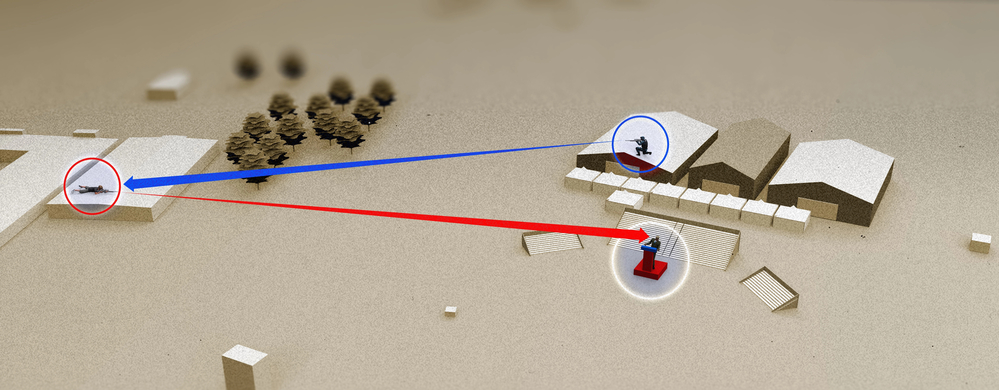
Three days before Thomas Crooks climbed onto a rooftop in Butler, Pennsylvania, and fired at Donald Trump from 150 yards, someone inside the Secret Service sent an email. "Good afternoon, Candidate Trump is expected to be exposed," it read, requesting an experienced drone operator for the July 13, 2024 rally. The counter-drone program leader later told investigators he "would have probably done that trip." He didn't. Nobody responded to the email. And for 9 to 11 minutes, Crooks flew his own drone over the rally site undetected.
The FBI has now released another batch of details about the assassination attempt. Every disclosure follows the same pattern: information that should have surfaced in week one trickling out two years later, each piece raising more questions than the last.
The new documents reveal that Crooks — who was 20 years old when he opened fire — had created four separate encrypted email accounts through Mailfence, with servers in Belgium, New Zealand, and Germany. The FBI accessed 35 accounts linked to Crooks in total. In communications with an online figure named Willy Tepes, Crooks wrote that "the only way to fight the gov is with terrorism style attacks." Tepes was connected to the Nordic Resistance Movement, a group with an estimated few hundred members. The FBI documented three communications between the two.
Then there's the physical evidence trail that somehow keeps getting murkier. A person resembling Crooks was spotted at Keystone Armory on May 25, 2024, accompanied by two other unidentified men. Two images of an unknown individual and their vehicle were retrieved from the armory. Crooks had joined a rifle club in August 2023 and made more than 40 visits to the range, practicing 100-yard shots — roughly the distance he'd fire from the AGR building roof.
Cell phone data showed someone visiting both Crooks's home and workplace, then traveling to the area around the FBI building in Washington, D.C. One of Crooks's devices was still pinging at Bethel Park High School after the shooting. His father, Matthew Crooks, was unemployed at the time. An anonymous donor paid for the cremation. The body was released within 10 days — with bullet fragments still inside.
Congressman Clay Higgins of Louisiana attempted to inspect the body on August 5, 2024. He was too late. Former Secret Service Director Kimberly Cheatle had already resigned after explaining the roof security gap by saying, "That building has a sloped roof. There's a safety factor." A sloped roof. That was the reason a 20-year-old with a rifle had an unobstructed line of sight to a presidential candidate.
The institutional stonewalling runs deeper than one director's resignation. Former FBI Director Christopher Wray ran the investigation during its most critical months. Senator Ron Johnson of Wisconsin, who chairs the Senate Permanent Subcommittee on Investigations, subpoenaed FBI Director Kash Patel in July 2025. Patel testified under oath in September 2025 but told investigators his hands were tied until a related trial concluded — "As soon as the trial is over." By December 2025, Johnson told reporter Miranda Devine that the FBI was still stonewalling his committee.
Trump himself told Bret Baier in May 2025 that he had no new information about his own assassination attempt. "Everybody knows the Crooked Joe Biden FBI didn't do what they should," he said. He referenced six cell phones connected to the case. Private investigator Doug Hagmann, working with the Heritage Foundation's Oversight Project, said his team had interviewed more than 100 people.
Sean Curran, who was in charge of Trump's security detail the day of the shooting, now runs the entire Secret Service. The agency's Inspector General stated, "We found no evidence that Technical Security Division members responded" to the July 10 email requesting drone coverage.
Every document dump follows the same choreography. Information surfaces. It contradicts previous timelines. New names appear without explanation. Encrypted accounts in three countries. Unidentified companions at an armory. A body cremated before Congress could examine it. A device pinging at a high school after its owner was dead.
The FBI had 35 accounts, encrypted communications with a foreign extremist, range logs showing months of practice, and cell phone data tracing a path to their own building in D.C. They've had all of it for over two years.
What they haven't had is an explanation for any of it.