
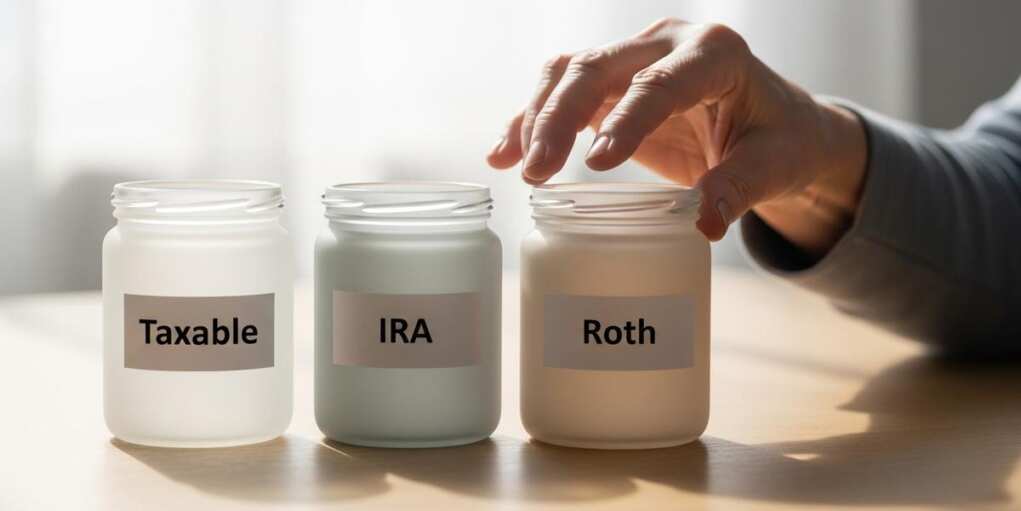
One of the most expensive mistakes retirees make isn’t what they invest in.
It’s which account they pull money from first.
The order of withdrawals from taxable accounts, traditional IRAs, and Roth accounts can quietly add — or subtract — tens of thousands of dollars in lifetime taxes. Yet many retirees withdraw randomly or default to whatever feels easiest.
A smart income sequencing strategy keeps more money working for you — and less flowing unnecessarily to the IRS.
Why Withdrawal Order Matters So Much
Each account type is taxed differently:
- Taxable accounts: Capital gains and dividends, often at favorable rates
- Traditional IRAs / 401(k)s: Fully taxable as ordinary income
- Roth accounts: Tax-free withdrawals and no RMDs
Pulling from the wrong bucket at the wrong time can:
- Push you into higher tax brackets
- Trigger Medicare IRMAA surcharges
- Increase how much of your Social Security is taxed
- Shrink future flexibility
Sequencing isn’t about avoiding taxes forever. It’s about controlling when and how much you pay.
The Smart Withdrawal Sequence (in Plain English)
For many retirees, a tax-efficient sequence looks like this:
- Start with taxable accounts Spending taxable assets first helps reduce future required distributions and avoids stacking ordinary income too early. You may pay some capital gains, but those rates are often lower than income tax rates.
- Use traditional IRAs strategically Traditional accounts are valuable — but dangerous if ignored. Controlled withdrawals (or partial Roth conversions) can keep balances from ballooning and triggering large RMDs later.
- Preserve Roth accounts as long as possible Roth money grows tax-free, isn’t subject to RMDs, and provides flexibility later in life. Keeping Roth funds intact gives you a powerful tool for high-expense years or tax emergencies.
This sequence isn’t rigid — but it’s a strong default starting point.
How This Helps With Medicare and Social Security
Income sequencing isn’t just about taxes.
It also affects:
- Medicare premiums: Higher income can trigger IRMAA surcharges
- Social Security taxation: More income means more benefits taxed
By drawing from taxable accounts first and smoothing IRA withdrawals over time, retirees can often stay under key income thresholds — saving money year after year.
Why “Just Take the RMD” Is a Trap
Some retirees wait until RMDs force their hand.
The problem? By then, balances may be large and flexibility limited.
Proactive sequencing allows retirees to:
- Take smaller IRA withdrawals earlier
- Convert portions to Roth at lower tax rates
- Avoid massive forced withdrawals later
Waiting turns a planning opportunity into a compliance exercise.
One Size Does Not Fit All
The ideal sequence depends on:
- Your tax bracket
- State taxes
- Portfolio size
- Age and health
- Social Security timing
- Medicare considerations
But having any sequence at all is better than withdrawing blindly.
The biggest risk isn’t imperfection. It’s randomness.
The Real Goal: Optionality
Great retirement planning creates options.
When Roth money is preserved, taxable accounts are managed, and IRAs are drawn down intentionally, retirees gain:
- Control over income
- Flexibility in bad markets
- Confidence when spending
You don’t need to outsmart the IRS. You just need to stop making it easy for them.
Turning Savings Into a System
You spent decades accumulating accounts.
Retirement is about orchestrating them.
With a clear withdrawal roadmap, your money lasts longer, works harder, and supports the retirement you envisioned — instead of leaking away through avoidable taxes and surcharges.