
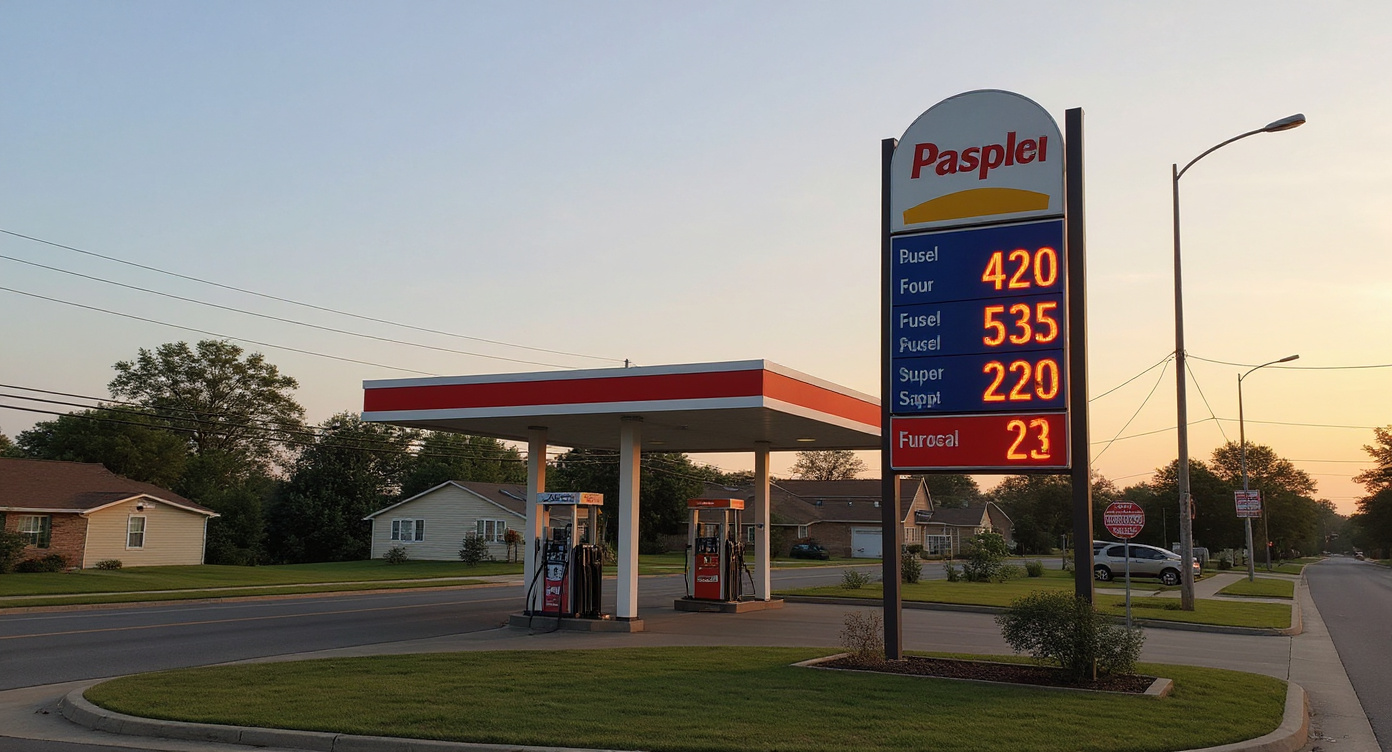
The national average for a gallon of regular gasoline sat at $4.11 on Friday. That's down from the $4.56 peak in May, but still a long way from the $2.98 Americans were paying in February before the Iran conflict spiked crude prices. The EPA just made a move to push it lower — two weeks ahead of schedule.
The tool they used? A rule most Americans have never heard of.
EPA Administrator Lee Zeldin announced that the agency is ending summer-blend gasoline requirements early, allowing refineries to begin selling cheaper winter-grade fuel on September 1 instead of waiting the usual timeline. The shift applies to E10 and E15 gasoline blends and uses something called an RVP waiver — a regulatory mechanism that gives the EPA a 20-day window to accelerate the seasonal fuel transition.
The logic is straightforward. Summer-blend gasoline is more expensive to produce because it requires lower vapor pressure to reduce emissions in hot weather. Winter-blend is cheaper. By letting refineries switch sooner, you increase the available supply of cheaper fuel. More supply, lower prices.
"Increasing the supply of gasoline means lower prices for American families," Energy Secretary Chris Wright said. "Today's action is another example of this Administration using every available tool to cut red tape, increase the supply of gasoline, and lower prices at the pump." Not exactly poetry, but it's the kind of sentence that translates directly into a few fewer dollars at the gas station.
Zeldin framed it as part of a pattern. "Throughout this administration, EPA has taken decisive action like issuing RVP waivers to provide relief at the pump and fortify our gasoline supply chain," he said. "Today, we continue this work with our federal partners to increase supply and lower gas prices for all Americans."
The typical gas station tank depletes in about 10 days, meaning drivers should see the cheaper winter-blend fuel appearing at pumps within two weeks of the September 1 date. That's real money in real pockets on a real timeline — not a five-year energy plan or a subsidy for electric vehicles most people can't afford.
Some states won't feel the full effect immediately. Texas, Arizona, and California maintain their own boutique fuel programs with additional requirements that can keep prices elevated regardless of federal action. Other blue states have layered their own environmental fuel mandates on top of federal rules for years. The EPA can waive its own regulations. It can't waive NYC's or Sacramento's.
The Department of Energy partnered with the EPA on this action, which tells you the administration views fuel prices as a whole-of-government problem rather than one agency's lane. That's a different posture than the previous administration, which treated high gas prices as an acceptable cost of the energy transition and told Americans to buy electric cars they couldn't afford.
Gas was $2.98 in February. It hit $4.56 in May. It's $4.11 now and heading down. Two weeks early on a regulatory change most voters will never read about.
Sometimes the best thing government does is get out of the way faster.