
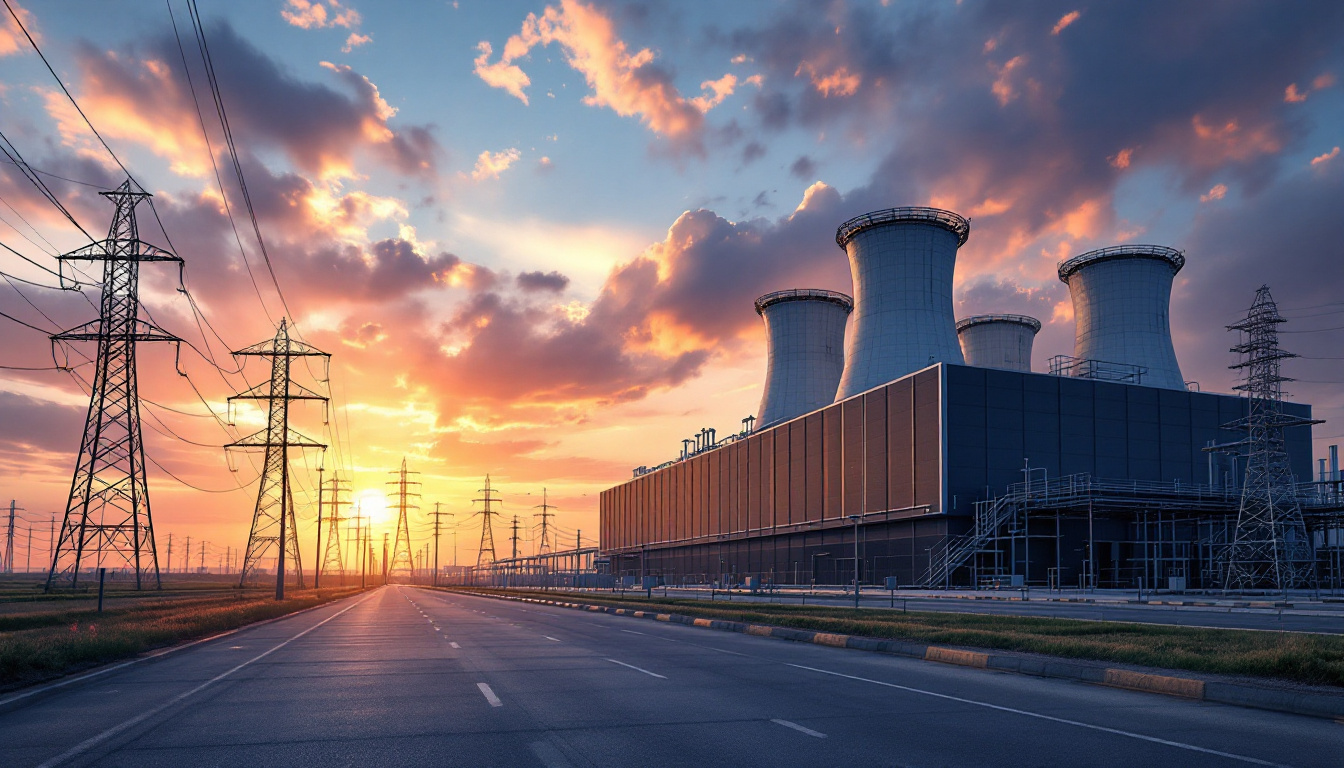
A data center company in Kansas recently offered residents $1,000 a year in utility and property-tax credits for a decade — just to let them build a 600-megawatt facility on 1,440 acres of local land. In Pennsylvania, a similar outfit dangled $10,000 per resident. These aren't acts of corporate generosity. They're damage-control payments, preemptive bribes to communities about to watch their electricity rates climb so Silicon Valley can train its next chatbot.
On Tuesday, President Trump ended the negotiation.
In a Truth Social post on October 21, Trump announced that new large-scale data centers are now "mandated by me to make their own electricity." Not subsidized electricity. Not discounted grid access courtesy of your local utility. Their own. Built, generated, and maintained by the companies profiting from the AI boom — not by retirees watching their fixed incomes shrink every time the power bill arrives.
The mandate goes further. Any excess power generated by these facilities must be returned to the local grid, and host communities must receive a direct financial "dividend" from the companies operating in their backyards. Trump's exact words: data centers must "pay the community, and/or individuals within the community, a 'dividend.'" Then, in classic fashion: "MAKE DEALS, and get them built!!! GREAT FOR THE U.S.A."
The context here matters. Data center construction has exploded across the country as AI-driven power demand surges. Reuters reported that the development wave has become "a political flashpoint" — and for good reason. These facilities consume electricity at industrial scale, and until now, the cost of feeding them has been quietly shifted onto existing ratepayers. That means families, small businesses, and — most acutely — retirees on fixed incomes who budget every dollar of every utility payment.
More than 300 organizations have signed a Ratepayer Protection Pledge committing to shield consumers from those costs. That pledge now covers utilities delivering 80 percent of American household electricity, protecting an estimated 263 million people. The pledge existed before Trump's announcement, but it was voluntary. Goodwill from power companies doesn't pay the electric bill. A presidential mandate does.
The companies most affected have been acquiring land and power contracts at a pace that had utility regulators quietly panicking. A single 600-megawatt facility draws enough electricity to power a small city. Multiply that across dozens of planned projects in rural and suburban communities, and the math gets ugly fast for anyone whose retirement budget includes a line item for "keeping the lights on."
The standard objection is that mandating self-generation will slow down AI development and push tech companies overseas. Except the companies offering $10,000 per resident aren't doing that because their margins are thin. They're doing it because the margins are enormous and the political backlash was becoming unmanageable. If they can afford to buy off entire towns, they can afford a power plant.
This is the part where the policy connects to something every American Retirement Insider reader already knows: when costs get socialized across a rate base, the people who absorb them last and feel them first are the ones who can't renegotiate their income. Retirees don't get cost-of-living raises when the utility adds a surcharge. Social Security adjustments trail inflation by a year. Every unexpected rate hike lands on a budget that was already finished.
Trump didn't frame this as consumer protection. He framed it as a deal — build it, power it yourself, share the upside with your fellow Americans. The 263 million people covered by the Ratepayer Protection Pledge now have a White House mandate backing the same principle.
One in three American households is headed by someone over 60. Their electricity consumption doesn't flex with earnings. It's heat in winter, cooling in summer, medical equipment year-round. Fixed demand, fixed income, and until Tuesday, a variable that somebody else controlled.
Now the variable has a ceiling.