
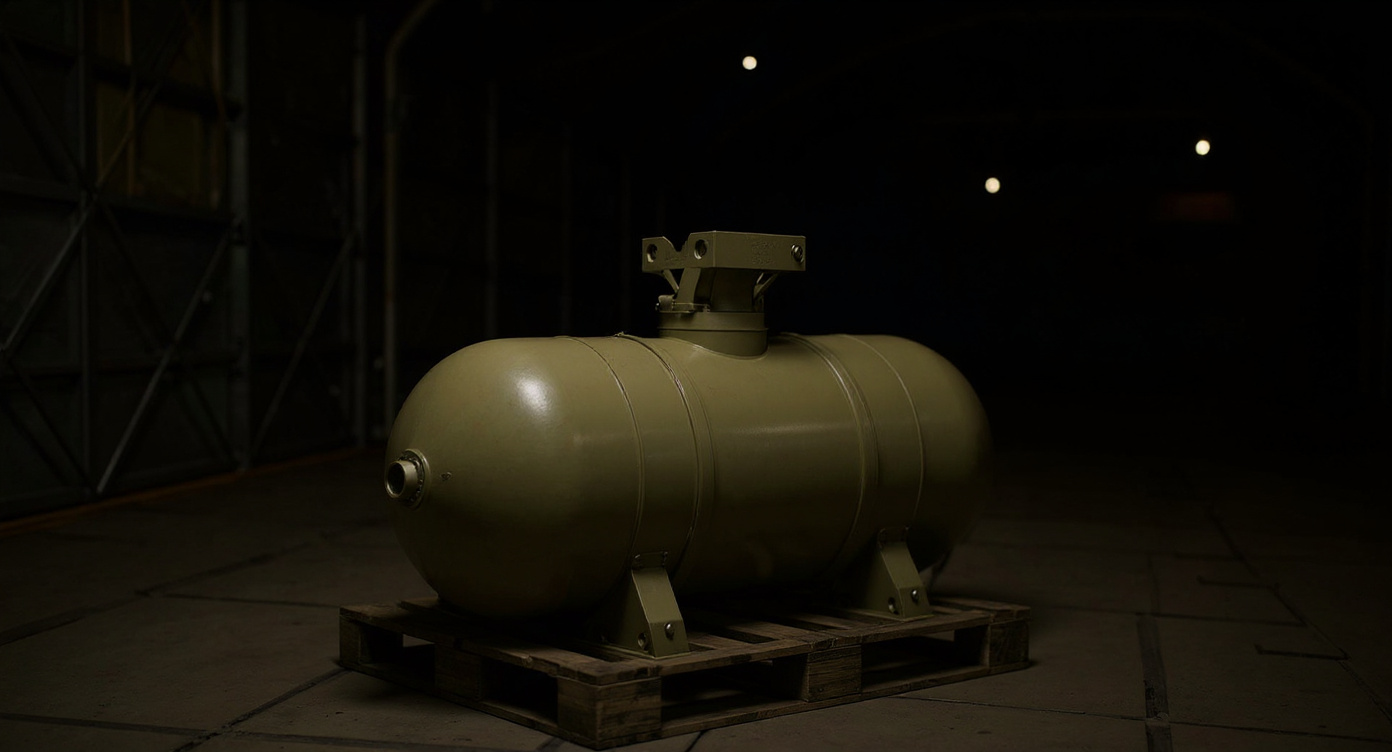
The GBU-43/B Massive Ordnance Air Blast bomb is 30 feet long, weighs 21,600 pounds, and can flatten nine city blocks in a single detonation. On Wednesday, President Trump confirmed it's on the table for Iran's fortified nuclear facilities — including the granite-encased bunker known as Pickaxe Mountain.
That's the non-nuclear option.
In an interview this week, Trump addressed the weapon directly. "Well the mother of all bombs is not nuclear," he said. "It's not nuclear at all, just an extremely large bomb. It's like a tiny nuclear bomb. But the mother of all bombs is one big bomb, but it's not nuclear."
He followed that with a line that landed like the weapon itself: "I wouldn't use nuclear. We don't have to. We're the greatest nuclear power in the world."
The Pentagon has drawn up new strike plans that specifically include the MOAB for targeting Iranian energy infrastructure and nuclear sites, according to multiple U.S. officials familiar with the planning. The options are designed for deployment either before or after the November midterm elections, depending on Trump's order to resume combat operations. The U.S. bombing campaign against Iran has now stretched past six months with limited results against the regime's most hardened targets.
Pickaxe Mountain is the problem. U.S. and Israeli intelligence believe Tehran has stored critical components of its nuclear program inside the facility, which is protected by layers of granite designed to absorb exactly the kind of conventional strike America has been delivering. The MOAB, a GPS-guided munition and the largest non-nuclear bomb in the U.S. arsenal, represents a different category of force — one that trades surgical precision for sheer destructive volume.
Some defense analysts have questioned whether even the MOAB can penetrate deep enough to reach underground facilities like Pickaxe Mountain. One former military official described it as "a massive information operation type weapon that is great for huge area clearance but not much else" and added it is "definitely not designed as a deep penetration warhead." Others have countered that the calculus isn't purely physical — as one analyst put it, "you have to look at psychological effects for which the MOAB is well-equipped."
The psychological dimension matters more than the Pentagon's critics want to admit. Iran's leadership has spent years building fortifications designed to survive American airstrikes. They planned for bunker busters. They planned for cruise missiles. They did not plan for a president willing to drop the largest conventional weapon ever built on their front door and talk about it on cable television beforehand.
That's not recklessness. That's leverage. The entire architecture of Iranian nuclear defenses is built on the assumption that America will play within predictable boundaries. A 21,600-pound GPS-guided bomb falling out of the sky while the president tells Newsmax it's "like a tiny nuclear bomb" rewrites those assumptions in real time.
The last president who dealt with Iran sent pallets of cash on an unmarked plane in the middle of the night and called it diplomacy. This one is publicly weighing a weapon that can level nine city blocks and daring Tehran to keep enriching uranium.
Iran's granite mountain is still standing. The MOAB weighs 21,600 pounds.