
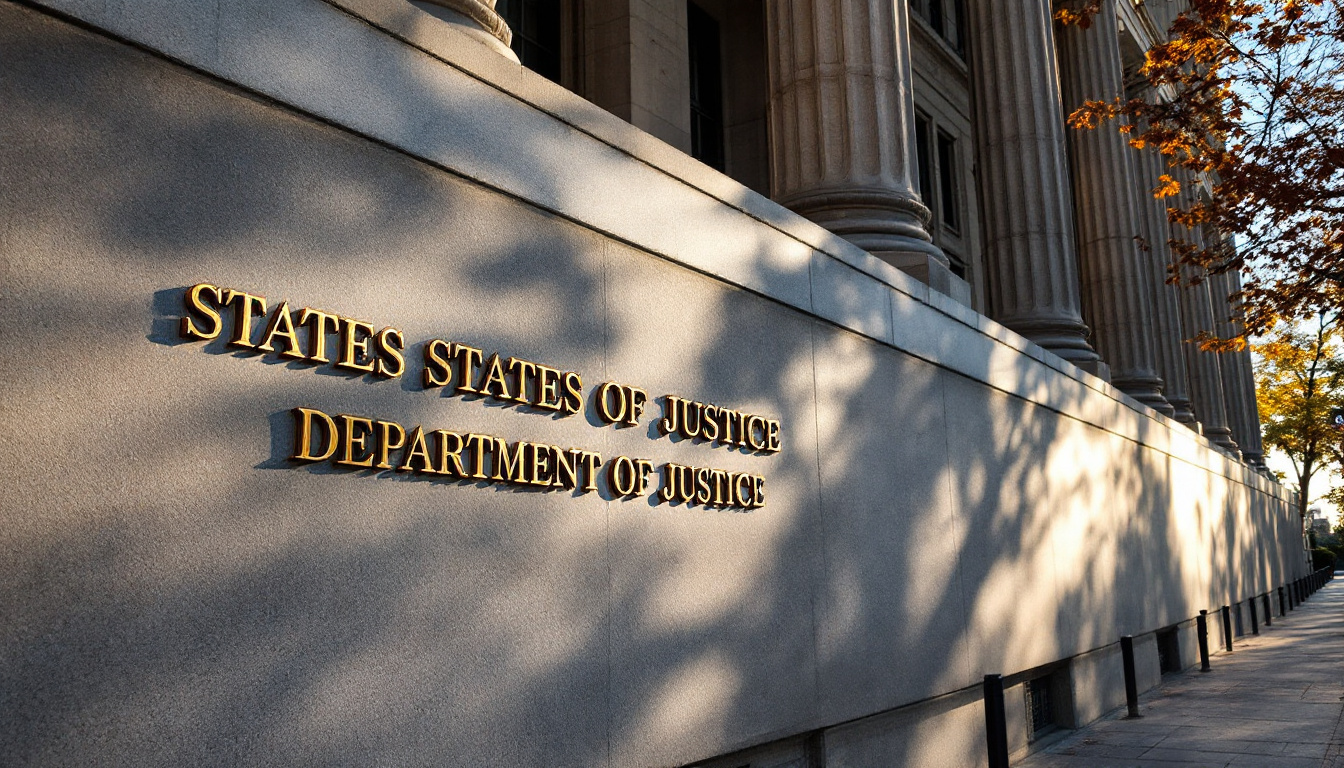
The Department of Justice just stood up an entire task force dedicated to hunting criminals who weaponize what the federal government now officially calls "super intelligence." Not a committee. Not a working group. A task force — with prosecutors, U.S. Attorneys' Offices, and a direct line to the Director of National Intelligence.
The crimes it targets are already happening.
Attorney General Todd Blanche announced the DOJ Super Intelligence Task Force — DOJ-SITF — on November 5, 2026, replacing the earlier AI Litigation Task Force with something that has actual teeth. The new unit targets foreign states, transnational criminal organizations, fraudsters, and corporate law-breakers exploiting advanced AI systems to attack American infrastructure, finances, and national security.
"DOJ will identify and prosecute those who use SI to target taxpayers, critical infrastructure or national security," Blanche said.
The task force isn't operating in a vacuum. It coordinates directly with the White House Super Intelligence Force, chaired by Jay Clayton, the Director of National Intelligence. That's not a bureaucratic reshuffling — that's intelligence and law enforcement locked in on the same target at the same time. Associate Attorney General Stanley Woodward is leading the DOJ side, with Associate Deputy Attorney General Stephen Weiss handling day-to-day operations.
Woodward framed the scope: "As technological capabilities evolve, the DOJ-SITF will advance the Department's mission to make America safe. Our comprehensive effort will promote innovation and prevent the misuse of Super Intelligence."
Two words in that statement matter more than the rest: promote innovation. This isn't a regulatory crackdown designed to strangle the technology before it matures. No new statutes were imposed. The task force uses existing criminal law to go after people exploiting the tools — not the tools themselves. That distinction matters, because the usual Washington instinct is to regulate first and figure out consequences later.
Back in September 2026, Trump directed federal agencies to adopt the term "super intelligence" in place of the catchall "AI" — a move that clarified the government is dealing with capabilities that go well beyond autocomplete and chatbots. The DOJ-SITF is the enforcement arm of that recognition.
The people who spent the last year demanding AI regulation wanted a new agency, new rules, new layers of compliance that would have handed incumbents a moat and locked everyone else out. What they got instead was a prosecutor's office that goes after criminals without punishing the technology. Foreign intelligence services using advanced AI to probe American infrastructure don't need a new regulation to stop them. They need an indictment.
The task force absorbs the work of the prior AI Litigation Task Force and expands it — broader jurisdiction, tighter coordination with intelligence, and a mandate that covers everything from state-sponsored cyber operations to garden-variety fraud enhanced by tools that didn't exist when most federal criminal statutes were written.
Enforce the law. Prosecute the criminals. Leave the technology alone.
That used to be an unremarkable position. Now it's a policy distinction worth a task force announcement.