
Elon Musk wanted to sell cell phone service, so he went to the three companies that control nearly all of it in America and asked to rent space on their networks.
Verizon, AT&T and T-Mobile all turned him down.
"We don't believe an MVNO with Starlink meets those criteria," a Verizon spokesman said. An MVNO is a company that sells phone plans on someone else's network. T-Mobile's CEO, Srini Gopalan, called satellite "inferior" technology and said there's "no space for an MVNO here."
So Musk decided to build his own.
Over the past year, SpaceX has bought up the airwaves a phone company needs. In 2025 it paid about $17 billion for wireless spectrum from EchoStar. On October 8 it agreed to buy a nationwide block of 800 MHz spectrum from Grain Management for about $8 billion. That low-frequency band travels long distances and gets through walls, so it's what keeps your phone working in your kitchen, your basement and your grandkids' school.
Spectrum is only part of what a phone company needs. It also needs towers, and SpaceX is working on those too. Crown Castle, which owns about 40,000 cell towers, confirmed on an October 21 earnings call that it's in talks with SpaceX. "You can assume that we're talking to all parties," CEO Chris Hillabrant said. SpaceX is reportedly after access to as many as 80,000 cell sites nationwide.
SpaceX is also in talks to buy Boost Mobile from EchoStar. That would give Musk about 7 million customers on day one.
Then there are the satellites. On October 6, the FCC cleared SpaceX to launch 15,000 satellites that connect straight to ordinary cell phones. Investors understood what that meant. When word of the tower talks got out, shares of AT&T and T-Mobile fell nearly 8 percent, and tower company stocks jumped.
The big carriers are fighting it in Washington. Their lobbying group, CTIA, has asked the FCC to keep satellite companies off key spectrum bands and to let the carriers keep control over who leases their airwaves.
Here's what it could mean for you.
A fourth competitor for your phone bill. For years, three companies have set the prices, and you've watched your bill climb whether or not your service got better. A new nationwide competitor forces the others to compete for your business, and so far the big three have only offered better deals when someone made them.
Service where the carriers never bothered. If you live outside a city, you know the spots: the stretch of highway where calls drop, the back of the property with no signal, the hospital parking lot with one bar. With satellites overhead and towers on the ground, Starlink could cover places the carriers decided weren't worth the money. That makes a difference when you need to call 911 from a country road.
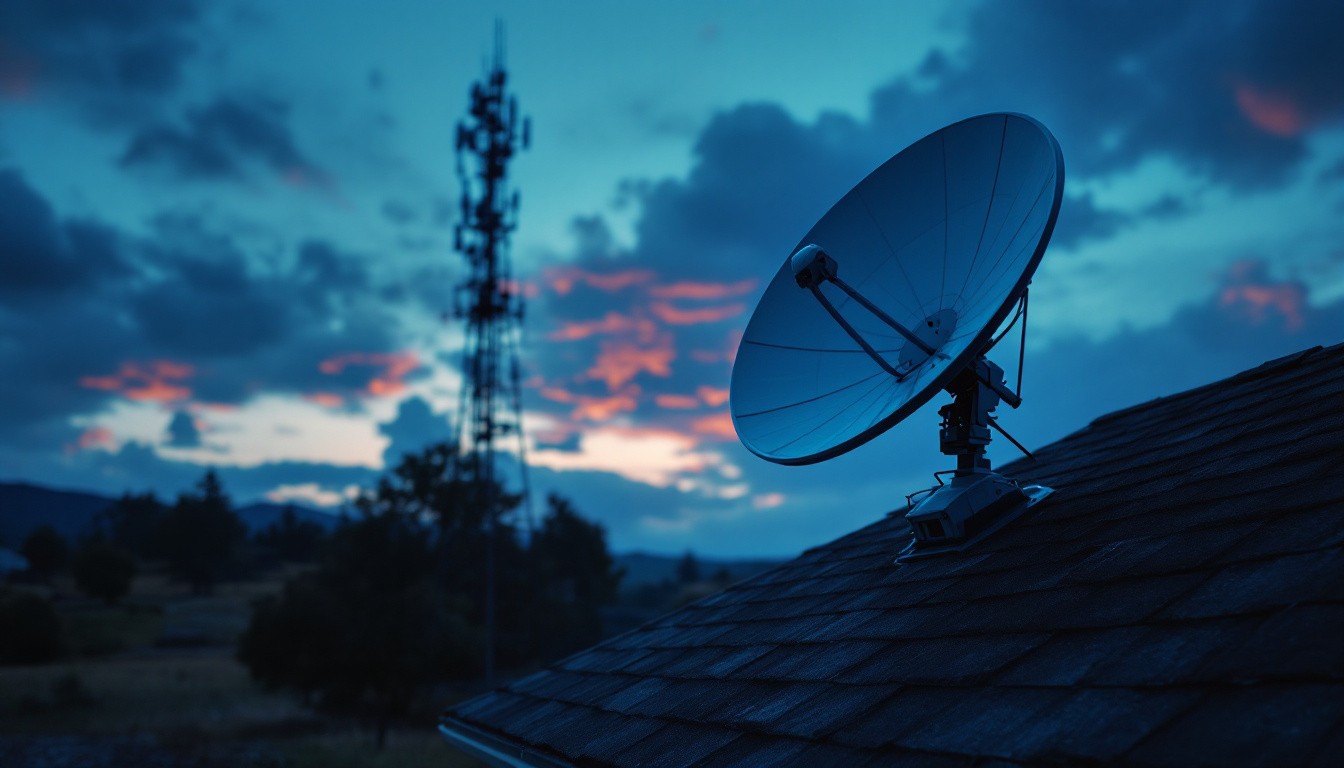
Your home internet could boost your cell signal. SpaceX plans to use its home Starlink equipment to put out a mobile signal around the house. If you already have a Starlink dish, it could give you strong cell service inside your home, where the carriers' towers can't reach.
Phone and internet on one bill, from one company. People who already use Starlink for home internet could add their phones to the same account.
None of it is here yet. The Grain spectrum deal still needs FCC approval. SpaceX's CFO has said the U.S. launch is targeted for the first half of 2028, and no prices have been announced. Verizon's CEO says it will take SpaceX four to six years to build a real ground network. Musk says about half that. He has missed deadlines before, but he still delivered the reusable rockets, the electric cars and the satellite internet that people said couldn't be built.
The phone companies could have let Musk onto their networks as a paying customer. They refused, and now he's building a network to compete with them.