
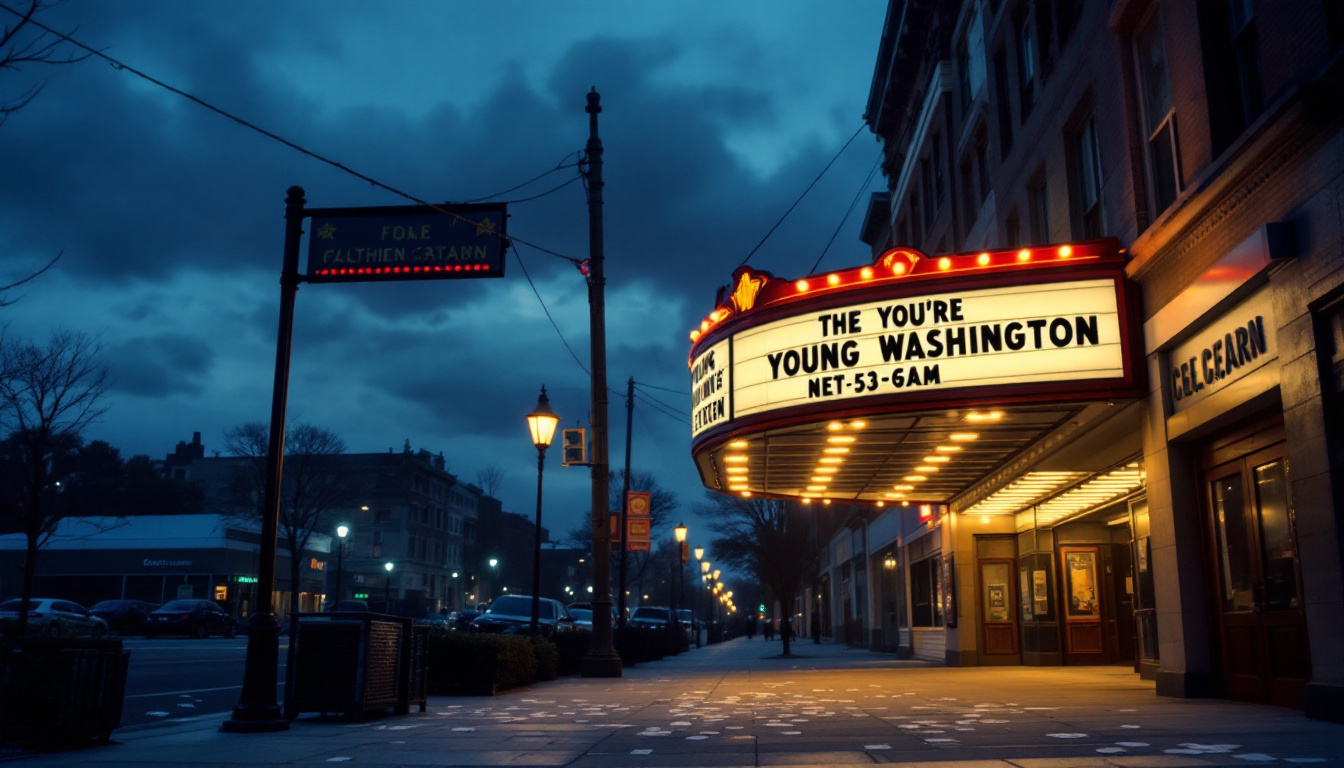
Young Washington, the historical movie drama about the early life and rise of George Washington, pulled in $7.6 million on its first day — double what Warner Brother's woke film, Supergirl, managed on its opening day. By the end of opening weekend, Young Washington had grossed $19.4 million. The total domestic haul now sits around $41 million.
The budget was $20 million. The movie is already in profit. Hollywood is pissed.
The movie was produced by Angel Studios, an outside of Hollywood movie studio that produces family-friendly, faith-based, and historically-inspiring films. It's the company that turned Sound of Freedom into a cultural phenomenon and is continuing to challenge the major studios' grip on theatrical distribution. Young Washington, starring Kelsey Grammer, Mary Louise Parker, Ben Kingsley and newcomer William Franklyn-Miller earned a 92% audience score on Rotten Tomatoes and a CinemaScore grade of A. Those aren't niche numbers. Those are the kind of audience metrics that Hollywood studio executives would frame on their walls if they'd produced the film.
But they didn't produce it. That's the part that stings.
Angel Studios operates on what it calls a "Pay-It-Forward" ticketing model. Audience members can purchase tickets for others, expanding reach without traditional marketing spend. The company's stated mission is that it has "revolutionized the entertainment industry by enabling viewers to play a part in creating and sharing stories." It's a distribution strategy that cuts the traditional studio gatekeepers out of the equation entirely.
The critical establishment is not taking it well. William Bibbiani, a critic at The Wrap, wrote that "Angel Studios repeatedly concludes their more jingoistic and religious films with a last-minute panhandle over the closing credits." He went further, claiming, "This suggests they don't actually think conservative themes are popular, since otherwise they wouldn't need to game the system."
A $41 million domestic gross on a $20 million budget is a funny way to "game the system." Most Hollywood studios would love to game it that effectively. The argument boils down to: audiences voluntarily buying extra tickets for other people is somehow illegitimate, while studios spending $200 million on films that lose money is the real business model.
The broader pattern here is unmistakable. Hollywood keeps producing films calibrated to win awards and Twitter praise while bleeding money at the box office. Angel Studios keeps producing films that audiences actually want to see — on budgets that don't require a second mortgage. Young Washington made back its production cost in a single weekend. Meanwhile, the major studios are writing off nine-figure losses on queer, woke superhero sequels nobody asked for.